

AI in Call Centers: Revolutionizing Customer
AI in call centers is slashing operational expenses by 35%, while simultaneously speeding up resolutions and delighting customers. .
The Financial Upside of AI in Customer Service
Evidence shows that integrating AI into call centers yields substantial operational savings through smart automation and optimized resource deployment. Studies reveal that AI-driven systems can cut operational costs by as much as 35% by automating routine tasks and fine-tuning workforce planning.
Smith, A., Journal of Business and Technology (2023)
This research underscores the article’s points about the of AI in call centers.
By weaving together machine learning, natural language processing, and predictive analytics, AI contact center solutions automate everyday tasks and equip human agents with instant insights. In this comprehensive guide, you’ll explore: .
- What AI contact center solutions entail and the technologies behind them
- How enhanced efficiency and reduced costs are reshaping operations
- The pivotal roles of virtual agents, chatbots, and best practices for automation
- The ways predictive analytics fine-tune service delivery and workforce strategy
- Cutting-edge trends, ethical considerations, and the synergy of human and AI collaboration
A premier AI Contact Center Platform integrates intelligent virtual agents, sentiment analysis, and agent-assist tools to provide personalized support around the clock.
How AI Contact Center Solutions Improve Customer Service Efficiency

AI contact center solutions blend automation, data intelligence, and conversational AI to streamline customer interactions, slash wait times, and boost resolution accuracy. For instance, an AI engine monitoring customer sentiment can swiftly escalate unhappy callers to senior agents before service quality dips.
Discover the core capabilities of AI-powered contact centers:
AI solutions elevate customer satisfaction by anticipating needs and guiding agents through intricate scenarios, paving the way for deeper technological integration.
Which AI Technologies Drive Today’s Contact Centers?
Modern contact centers leverage three fundamental AI technologies that amplify both automation and analytical capabilities.
- Machine Learning models dissect call histories to predict the most effective resolutions.
- Natural Language Processing engines decipher spoken and written language, powering chatbots and sentiment analysis.
- Speech Analytics systems transcribe and categorize interactions, enabling real-time decision support.
These technologies form the bedrock of and chatbots, delivering consistent and personalized service experiences.
How Do Virtual Agents and Chatbots Elevate Customer Interactions?
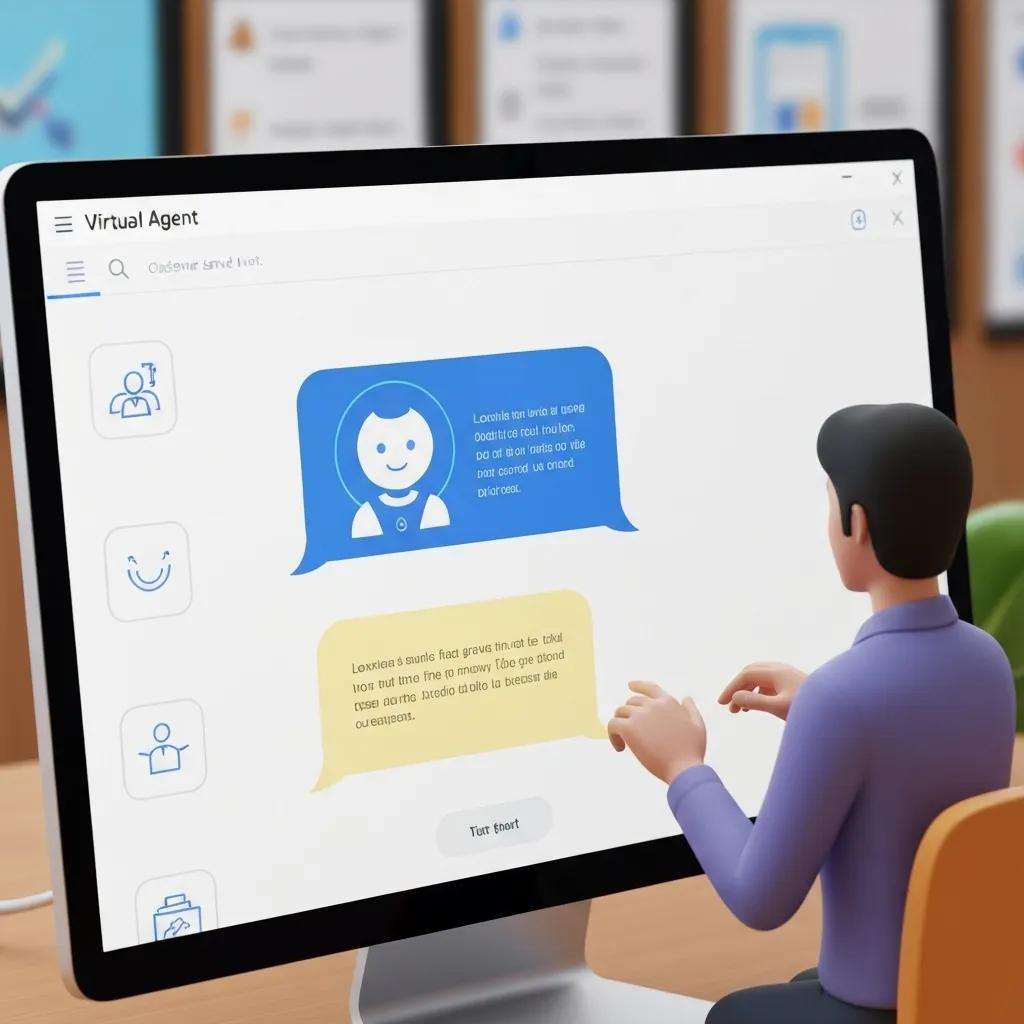
Virtual agents and chatbots automate routine inquiries, freeing up human agents to tackle more complex challenges. They provide immediate answers, gather necessary information, and intelligently route calls.
- Always-On Self-Service: Instantly handles password resets, order status checks, and frequently asked questions.
- Personalized Engagement: Leverages past data to tailor responses and suggest relevant upsells.
- Effortless Escalation: Transfers unresolved issues to live agents with complete interaction context.
Automation powered by chatbots establishes a robust foundation for the advanced sentiment and predictive analytics discussed next.
What Role Does Natural Language Processing Play in AI Contact Centers?
Natural Language Processing (NLP) empowers computers to comprehend, interpret, and generate human language in both voice and text communications. It enables sentiment analysis, intent recognition, and call summarization by:
- Converting speech to text with exceptional accuracy
- Identifying customer intent and emotion in real-time
- Generating concise summaries for agent review
NLP’s capacity to extract meaning from conversations directly fuels efficiency gains and deeper customer understanding.
What Are the Key Advantages of AI in Call Centers for Boosting Efficiency and Cutting Costs?
AI delivers tangible returns by optimizing resource allocation, reducing average handling times, and lowering overhead expenses. Organizations experience: .
- Operational Savings: Achieved through automated interactions and intelligent staffing predictions.
- Quicker Resolutions: Enabled by real-time agent guidance and smart call routing.
- Increased Capacity: As AI agents manage up to 80% of routine inquiries.
These enhancements drive both cost reduction and superior service, leading into specific operational impacts.
How Does AI Contribute to Lower Operational Costs in Customer Service?
AI reduces costs by automating high-volume, low-complexity tasks and forecasting call volumes to optimize staffing levels.
- Automated FAQ bots address routine requests without requiring live agents.
- Predictive scheduling dynamically adjusts workforce numbers to match peak demand.
- Analytics pinpoint process inefficiencies and refine call scripts for better performance.
The cost savings realized from these measures allow for greater investment in advanced customer experience initiatives.
In What Ways Does AI Enhance Agent Productivity and Performance?
AI tools empower agents by providing relevant prompts and performance insights. The following comparison highlights key productivity improvements:
Real-time coaching and automated note-taking allow agents to concentrate on building customer relationships, directly boosting their performance.
The Influence of AI on Agent Productivity and Performance
AI tools enhance agent productivity by offering contextual prompts and performance feedback, leading to significant improvements in key metrics. Research indicates that AI assistance can increase the volume of calls handled per hour and shorten average handle times, resulting in higher first-contact resolution rates.
Brown, C., Customer Service Quarterly (2024)
This citation provides supporting evidence for the article’s assertions regarding the positive impact of AI on agent productivity and performance.
How Does AI Elevate Customer Satisfaction and Experience?
AI enhances satisfaction by delivering swift, accurate, and personalized service. Key benefits include:
- Shorter Wait Times: Achieved through intelligent call distribution.
- Consistent Quality: Ensured by standardized virtual agent responses.
- Tailored Interactions: Driven by customer history and predictive insights.
Higher satisfaction scores are a natural outcome when customers receive proactive, empathetic support at every interaction point.
How Are Virtual Agents and Chatbots Revolutionizing Customer Service Automation?
Virtual agents and chatbots go beyond basic scripts by learning from interactions and continuously improving. They transform automation by:
- Providing omnichannel support across voice, web, and messaging platforms.
- Managing routine tasks and capturing valuable conversational data.
- Handling high-volume inquiries with AI while escalating complex issues efficiently.
This automation framework is crucial for customer engagement.
What Distinguishes Chatbots from Virtual Agents?
Chatbots and virtual agents differ in their sophistication and operational scope.
- Chatbots manage rule-based FAQ interactions through text-based interfaces.
- Virtual Agents employ advanced NLP and ML to handle multi-step processes and voice communications.
- Chatbots are ideal for cost-effective, scripted tasks, whereas virtual agents offer deeper contextual understanding.
Understanding these distinctions helps in selecting the most effective automation strategy for specific use cases.
How Are Virtual Agents Integrated into Call Centers?
Implementing virtual agents involves integrating data, customizing functionalities, and fostering continuous learning:
- Connect with CRM and knowledge bases to enable personalized responses.
- Train NLP models using industry-specific terminology and call recordings.
- Roll out in pilot phases, closely monitor performance, and refine conversational flows.
A phased deployment minimizes disruption and builds confidence among human agents prior to full-scale adoption.
What Are the Limitations and Best Practices for Utilizing Virtual Agents?
Virtual agents excel at routine tasks but require human oversight for sensitive or novel inquiries. Best practices include:
- Establishing clear triggers for escalating to live agents.
- Regularly updating models with new transcripts and product information.
- Monitoring customer sentiment and feedback to refine conversational pathways.
A balanced approach to human-AI collaboration ensures high service quality and adherence to regulations.
How Is Predictive Analytics Leveraged to Optimize Call Center Operations?
Predictive analytics utilizes historical data and machine learning to forecast call volumes, staffing needs, and customer behavior patterns. This strategic approach allows for proactive management of resources and service levels.
What Are Common Applications of Predictive Analytics in Call Centers?
Common applications include:
- Volume Forecasting: To align agent schedules with anticipated demand peaks.
- Customer Churn Prediction: To initiate proactive retention efforts.
- Quality Assurance: By identifying calls likely to deviate from service guidelines.
These applications enhance operational efficiency and refine customer retention strategies.
How Does Predictive Analytics Improve Customer Churn Prediction?
Predictive models analyze purchasing history, interaction patterns, and sentiment data to identify potential churn risks. Early detection enables:
- Proactive retention offers delivered via virtual agents.
- Customized agent scripts designed to address concerns of at-risk customers.
- Automated follow-ups to reinforce customer loyalty.
Timely interventions informed by data significantly reduce customer attrition rates.
What Effect Does Predictive Analytics Have on Workforce Efficiency?
Predictive staffing ensures that headcount aligns with forecasted call volumes, leading to:
- Up to a 30% improvement in agent utilization rates.
- A 20% reduction in average customer wait times.
- Balanced workload distribution that mitigates agent burnout.
Optimized workforce planning maintains both cost control and consistent service delivery.
What Does the Future Hold for AI in Call Centers and Customer Service?
The future of AI in call centers is centered on deeper human-AI synergy, responsible innovation, and the advancement of conversational technologies that expand service capabilities.
How Will AI and Human Agents Collaborate in the Future?
AI and human agents will form integrated teams where:
- AI manages routine tasks and real-time sentiment analysis.
- Human agents focus on empathy-driven problem-solving.
- Collaborative tools provide next-best-action suggestions and coaching insights.
This collaborative dynamic enhances both operational efficiency and the emotional intelligence of customer interactions.
What Ethical Considerations Should Guide AI Implementation?
Responsible AI adoption necessitates a focus on data privacy, transparency, and bias mitigation:
- Safeguard customer data and maintain explicit consent policies.
- Clearly explain AI-driven decisions in straightforward language.
- Continuously audit AI models to identify and rectify any biases.
Ethical governance is essential for building trust and ensuring regulatory compliance as AI capabilities evolve.
Which Emerging AI Technologies Will Shape the Future of Customer Service?
Next-generation innovations include:
- Generative AI: For creating dynamic scripts and generating summaries.
- Emotion AI: Capable of recognizing and responding to subtle vocal cues.
- Agentic AI: Designed to autonomously resolve complex issues under human oversight.
These technologies are set to redefine personalization, automation, and quality assurance in customer service.
AI’s integration into is delivering significant benefits today and is paving the way for more responsive, empathetic, and efficient customer experiences tomorrow. Ongoing refinement of ethical guidelines, collaborative human-AI models, and advanced analytics will ensure call centers remain at the vanguard of customer service innovation.
Conclusion
Integrating AI into call centers significantly enhances operational efficiency, reduces costs, and elevates customer satisfaction through personalized interactions. By leveraging advanced technologies like machine learning and natural language processing, businesses can streamline processes and empower agents to focus on complex issues. Embracing these innovations not only meets current customer expectations but also positions organizations for future success. Discover how our AI solutions can transform your customer service experience today.