


Data Conversion Services

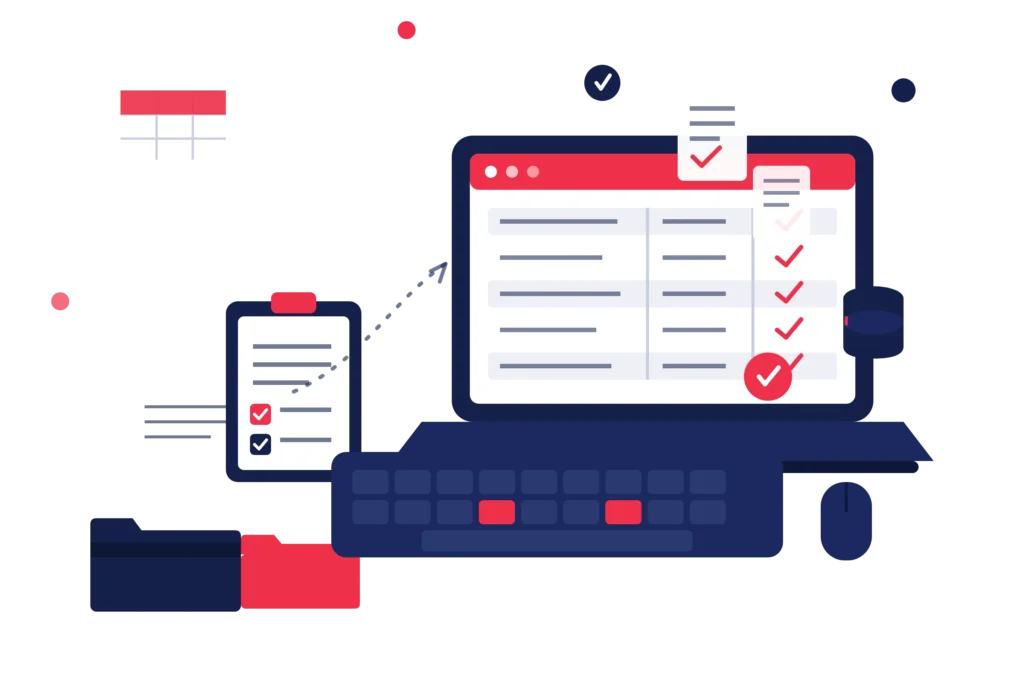
Our Data Workflow
Receive Data
Convert / Process
Quality Check
Deliver Results
Common Challenges
Disorganized records
Billing delays
Disorganized records
How We Help
Structured indexing
Accurate billing support
Defined operational workflows
Why E-commerce Teams Choose Us
- Faster Order Handling
Reduce processing time and speed up delivery.
-
Better
Coordination
Seamless communication across your operations.
-
Scalable
Support
Easily scale your team as your store grows.

Data Conversion Services for Accurate and Structured Data Transformation
Companies function in multiple environments with varying platforms, systems, and data formats. Data will eventually be accumulated in disparate formats – PDF, Excel, outdated systems, and databases – that can’t be used effectively.
Conversion services aid companies in transforming data between disparate formats while preserving accuracy, consistency, and utility. Rather than undertaking these tasks manually, companies implement structured data conversion processes that guarantee interoperability within systems.
At Dazonn Assist, we handle data conversion in a controlled process using back office operations and workflow management processes for data handling. We offer our data conversion services to businesses operating within the United States, the UK, Canada, and Australia.
100% Secure
Your data is protected
Expert Team
Trained & experienced
Proven Results
Trusted by growing businesses
- Dazonn Assist
Get a Custom Outsourcing Support Plan
Tell us your requirements and our team will suggest the right outsourcing model for your business.
What Are Data Conversion Services?
The process of data conversion services consists of transferring data from one form, structure, or system to another without affecting its precision.
It consists of changing the form of data from one form, such as PDF, Excel, Word, XML, CSV, and databases, among others. Data conversion services go beyond changing file types; the objective of such services is to make the data structured, readable, and functional in other systems.
Structured data conversion goes further than file conversion as it includes validation and formatting.

What Tasks Are Included in Data Conversion Services?
Data conversion processes usually entail a series of well-defined processes that include:
Document-to-Digital Conversion
- Conversion of scanned documents and PDF files to readable forms
- Conversion of paper or image data to structured forms
Format Conversion
- PDF to Excel or CSV
- Word to structured database forms
- Spreadsheets to compatible formats
Database Conversion
- Migration of data from one database to another
- Preparation of data for upgrading systems
Data Extraction
- Identification of useful data to be extracted from documents
- Identification of data fields for conversion
Data Structuring and Formatting
- Organization of converted data into structured formats
Data Validation
- Validation of data after conversion
- Verification of errors, such as incomplete information
How Do Data Conversion Services Work?
Data conversion follows a structured, multi-step process to ensure accuracy and compatibility for data analysis services.
Conversion Workflow
| Stage | Description |
|---|---|
| Input Assessment | Reviewing source data formats and quality |
| Data Extraction | Identifying and extracting usable data |
| Format Conversion | Transforming data into required formats |
| Data Structuring | Aligning data with system requirements |
| Validation | Performing accuracy and consistency checks |
| Final Delivery | Providing clean, usable, converted data |
Each stage is supported by defined quality checks to ensure the output meets business needs.
Who Should Use Data Conversion Services?
These types of services are employed by companies that require data to be handled using several different systems, or to improve their data structures.
Common Companies Include:
eCommerce firms with catalog data
Financial institutions with transactions and reports
IT staff working with healthcare data handling
SaaS firms needing to migrate or restructure databases
Firms upgrading from older systems or that require assistance handling inconsistent data formats or database migrations find these data entry services most useful.
Common Business Use Cases
Data conversion services cater to several purposes, including:
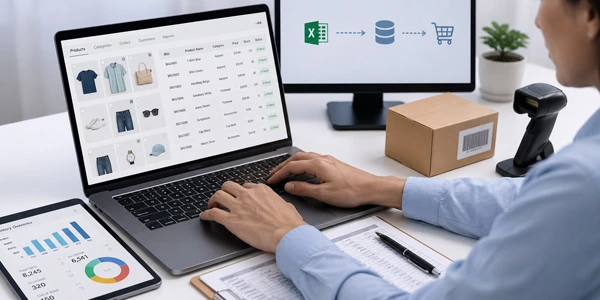
Ecommerce
- Conversion of product catalogs for marketplaces
- Conversion of inventory data for various systems

Finances and Accounting
- Conversion of financials to standard formats
- Conversion of data to be used in report generation systems
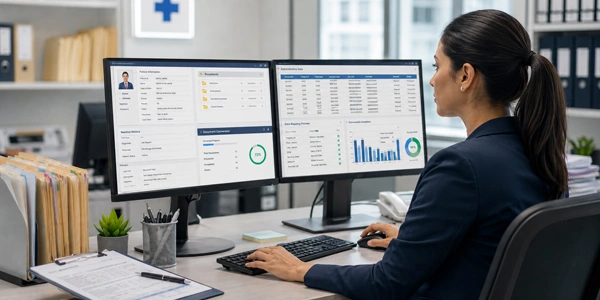
Health care support
- Conversion of medical data
- Conversion of administrative data

Migration of legacy systems
- Conversion of legacy system data to more current systems
- Conversion of data in preparation for use in current systems
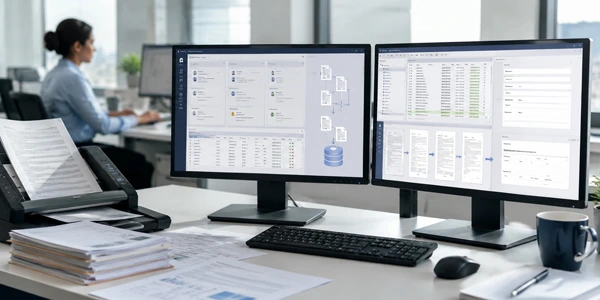
Administrative Purposes
- Conversion of CRM data
- Conversion of document data
Key Benefits of Data Conversion Services
Transformed data can be easily accessed, located, and used.
Data is compatible with the new system or technology.
Well-structured procedures ensure error-free data transformations.
Larger volumes of data can be efficiently handled.
Conserves quality during the data transformation process.

Quality Control and Data Integrity
Data integrity is vital in data conversion services.
Quality Indicators
Validation at multiple levels
Verification of format uniformity
Identification of duplicates and errors
Systematic review procedures
Such mechanisms guarantee the accuracy, completeness, and reliability of the converted data.
Data Security and Compliance
Data conversion can entail the use of proprietary business data. Security measures are critical.
Important factors to consider include :
- Restriction of data access during data conversion
- Data transmission security techniques
- Process-based financial data management
- Adherence to industry-specific data standards
These measures help maintain data integrity during the entire conversion process.
Data Conversion vs Data Processing
| Aspect | Data Conversion | Data Processing |
|---|---|---|
| Focus | Changing data formats | Organizing and improving data |
| Scope | Format transformation | Data cleansing and validation |
| Output | Converted data | Structured and usable data |
| Use Case | System compatibility | Order data management systems |
Data conversion focuses on format transformation, while data processing workflows ensure usability and quality. Both often work together in structured workflows.
Onboarding and Implementation
Data conversion processes usually start with an organized onboarding process that is characterized by :
- Requirement analysis
- Source and destination format understanding
- Workflow design
- Definition of rules for conversion and output format
- Pilot data conversion
- Full-scale deployment
This will ensure accuracy and correctness before starting full-scale data conversion.
Why Structured Data Conversion Matters?
Ineffective data may impede operations and cause inefficiencies within the system. Data conversion to a structured form enables smooth data transfer and process flow.
Outsourcing data conversion helps organizations handle intricate data conversions without creating any operational burden for the company.

Frequently asked questions
What are data conversion services?
Data conversion services refer to the process of changing data from one system or format to another.
What kinds of formats can be changed?
Common formats are PDF, Excel, Word, CSV, XML, and database formats.
How is data integrity ensured during the conversion process?
By means of validation procedures and quality control measures.
Can data conversion be applied to system migration projects?
Yes, data conversion can be applied to migrate data from old to new systems.
How is data confidentiality guaranteed during the process?
Through secured data handling and transferring mechanisms.
Can large amounts of data be converted?
Yes, structured workflow enables the handling of any amount of data.