



Logistics Support Services

Our Data Workflow
Receive Data
Convert / Process
Quality Check
Deliver Results

Common Challenges
Disorganized records
Billing delays
Disorganized records
How We Help
Structured indexing
Accurate billing support
Defined operational workflows


Why E-commerce Teams Choose Us
- Faster Order Handling
Reduce processing time and speed up delivery.
-
Better
Coordination
Seamless communication across your operations.
-
Scalable
Support
Easily scale your team as your store grows.

Logistics Support Services for Structured Shipment and Supply Chain Coordination
The process of managing logistics requires the coordination of movements of shipments, the management of deliveries, the management of paperwork, and communication. With an increase in order quantities and growing supply chains, it becomes more difficult to keep track of all aspects involved.
In this regard, logistics support services offer assistance for companies in carrying out these functions via standardized procedures and systems. Rather than handling logistics in a non-standardized manner or across different systems, companies employ a logistics support team.
Here at Dazonn Assist, we provide logistics support in a professional and back-office environment that caters to all business segments from the USA, UK, Canada, Australia and other international markets.
100% Secure
Your data is protected
Expert Team
Trained & experienced
Proven Results
Trusted by growing businesses
- Dazonn Assist
Get a Custom Outsourcing Support Plan
Tell us your requirements and our team will suggest the right outsourcing model for your business.

What Are Logistics Support Services?
In logistics support services, coordination and administration of the logistics activities involved in the shipment are the primary considerations.
These include monitoring the shipment, scheduling its dispatch, dealing with documentation issues, and liaising with carriers, among others. The aim here is to ensure that the entire logistics process is well-coordinated, clear, and meets operational requirements.
In contrast to physical logistics execution like warehousing or transport of goods, logistics support involves coordination and process management.
What Tasks Are Included in Logistics Support Services?
The functions involved in providing logistics support services are varied and include:
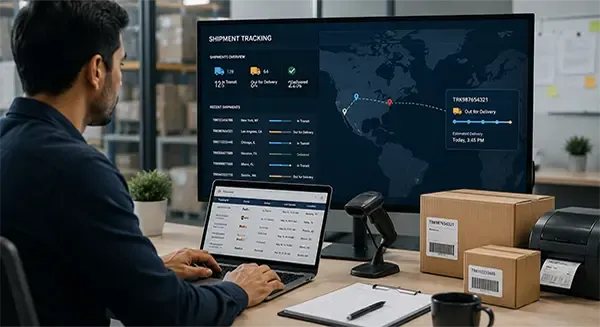
Tracking of shipments
- Tracking the status of shipments across logistics service providers
- Updating systems with the status of shipment delivery

Coordination of shipments
- Coordinating the shipment schedule
- Ensuring that the process of order and the dispatch are in sync with each other

Communication with logistics service providers/transporters
- Communication with logistics service providers/transporters
- Clarifying queries related to shipments

Documentation management
- Managing all documentation relating to the shipment
- Ensuring that shipments have the required documentation, both domestic and international

Problem handling
- Handling exceptions such as delays in shipments, missing shipments, etc.
- Updating orders and shipments
- Updating orders and shipments both internally and externally
How Do Logistics Support Services Work?
Logistics support follows a structured workflow designed to maintain visibility and coordination across the supply chain.
Logistics Workflow
| Stage | Description |
|---|---|
| Order Dispatch Planning | Aligning orders with shipment schedules |
| Shipment Initiation | Coordinating dispatch with carriers |
| Tracking and Monitoring | Monitoring shipment progress |
| Communication | Updating stakeholders on status |
| Exception Handling | Resolving delays or issues |
| Documentation | Managing shipment records |
| Reporting | Providing operational insights |
Who Should Use Logistics Support Services?
Logistics support services are ideal for organizations that have to handle shipment activities at various locations or through various systems or transporters.
Common Users Include:
Online retailing businesses that ship their products often
Multi-channel retailing businesses
Businesses involved in distribution and wholesaling
Logistics firms
Manufacturing organizations involved in supply chain activities
Businesses having problems with shipment activities can take help from logistics support services.
Common Business Use Cases
The application of logistics support services is found in numerous situations:
E-commerce Logistics
- Tracking shipment status across different shipping companies
- Updating customers on the status of their deliveries
Retail Logistics and Distribution
- Managing shipments from the warehouse to retail outlets
- Managing large quantities of order dispatch
International Logistics
- Managing documents and coordinating shipments that cross borders
- Tracking international shipments
Logistics Supply Chain Management
- Facilitating full transparency in logistics operations
- Aligning procurement, inventory, and delivery.
Key Benefits of Logistics Support Services
Real-time tracking offers visibility of shipments within the supply chain.
The workflow process is set for efficient coordination of shipments.
A proper system avoids making errors while managing shipments.
Communication about the shipment status is maintained.
Handling increased shipments does not disrupt workflow processes.
Quality Control and Reporting
Logistics support service operations depend on set methods of monitoring and reporting. Our logistics reporting and analysis support helps businesses track shipment performance, identify delays, and monitor delivery trends.
Quality Measurements
- Validations of shipment status
- Verification of documentation
- Processes of exception handling
Reporting Processes
- Tracking reports for shipments
- Insights into delivery performance
- Reports on exceptions and delays
System Integration and Coordination
Logistics services require coordination with other systems for operations:
Areas of Coordination
Order Management Systems
Inventory Management Systems
Shipping Management Systems
Communication Tools for Customers
Coordination of logistics services ensures a seamless flow of shipment information through all systems.
Logistics Support vs Logistics Execution
| Aspect | Logistics Support | Logistics Execution |
|---|---|---|
| Focus | Coordination and tracking | Physical movement of goods |
| Scope | Back-office operations | Transportation and warehousing |
| Output | Managed and tracked shipments | Delivered goods |
Logistics support focuses on managing processes and visibility, while execution involves physical handling of shipments.
Onboarding and Implementation
Support services offered through logistics usually start with an onboarding process that involves the following steps:
Getting to know the workflow involved in shipping
Creating workflow for tracking, communications and reports
Integration of systems for orders and logistics
Running a pilot with sample shipments
Implementing the service in line with the validated process
Why Structured Logistics Support Matters
Inconsistent logistics processes may result in delays, the absence of visibility, and communication breakdowns. The use of structured logistics support will guarantee accurate tracking, effective management of problems and continuous communication between all parties involved.
Through logistics outsourcing, companies are assured of consistent operations without burdening their internal departments with additional work.

Frequently asked questions
What are logistics support services?
Logistics support services entail the process of managing shipment tracking, shipment coordination and communication.
What is included in logistics support services?
Logistics support services involve shipment tracking, shipment coordination, carrier communications, document management and exceptional management services.
How can logistics support services help your company?
Logistics support services improve visibility, reduce mistakes, and ensure consistent communication between shipments.
Can logistics support services be applied to small companies?
Surely, especially for those companies that have to deal with increasing numbers of shipments.
How would you manage shipment difficulties?
Shipment difficulties would be managed using exceptional management services and carrier coordination.
Are logistics support services compatible with other systems?
Certainly, services are fully integrated with order management, inventory, and logistics management systems.