


Healthcare BPO Services
- Home
- Healthcare BPO Services

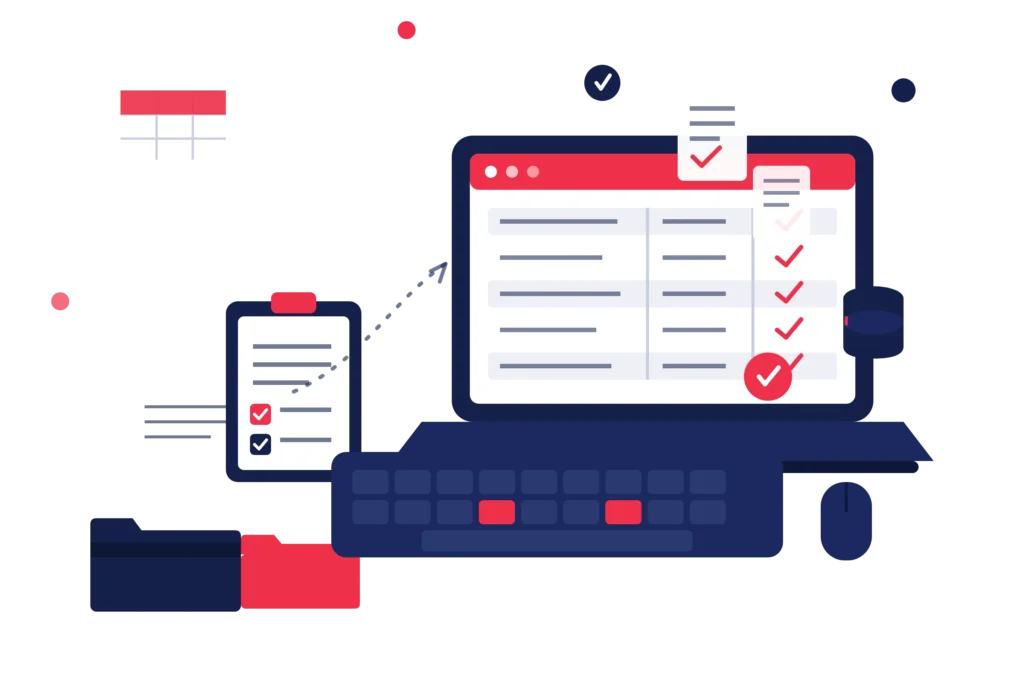
Our Data Workflow
Receive Data
Convert / Process
Quality Check
Deliver Results
Common Challenges
Disorganized records
Billing delays
Disorganized records
How We Help
Structured indexing
Accurate billing support
Defined operational workflows

Why E-commerce Teams Choose Us
- Faster Order Handling
Reduce processing time and speed up delivery.
-
Better
Coordination
Seamless communication across your operations.
-
Scalable
Support
Easily scale your team as your store grows.

Healthcare Outsourcing Services for Scalable Operations
Several tasks are associated with healthcare organizations apart from offering treatment services. Many administrative activities include medical billing, insurance, coding, claims, patients’ records, data entry, and billing follow-up that need to be performed correctly and consistently.
Healthcare outsourcing services make it possible for hospitals, clinics, medical billing agencies, insurance organizations, and healthcare support agencies to delegate some of the non-clinical administrative functions to an external team.
Dazonn Assist supports healthcare administrative processes for organizations across the USA, UK, Canada, Australia, and other markets through structured outsourcing models aligned with client workflows and operating requirements.
100% Secure
Your data is protected
Expert Team
Trained & experienced
Proven Results
Trusted by growing businesses
- Dazonn Assist
Get a Custom Outsourcing Support Plan
Tell us your requirements and our team will suggest the right outsourcing model for your business.
What Do Healthcare Outsourcing Services Include?
There can be many interlinked processes within healthcare administrative services. The choice is based on the number of patients, the documentation procedures, the revenue cycle process, the organization’s own processes, and the tasks that need to be outsourced.
Medical Billing Services
Supporting insurance verification, charge entry, claim preparation, payment posting, denial follow-up, and related billing processes.
Medical Record Indexing Services
Classifying, tagging, and organizing medical documents so authorized teams can retrieve records more systematically.
Medical Coding Services
Converting documented diagnoses, procedures, and healthcare services into appropriate standardized codes for billing and record workflows.
Medical Data Entry
Entering patient demographics, insurance information, billing details, and other approved healthcare data into authorized systems.
Medical Collection Services
Supporting payment follow-ups, outstanding account management, claim-related collections, and revenue-cycle communication.
Insurance Verification and Eligibility
Reviewing available patient and payer information before billing or claim processing.
Claims Follow-Up and Payment Tracking
Monitoring submitted claims and identifying items that require additional action.
Healthcare Data Processing and Reporting
Organizing, validating, and preparing healthcare information for administrative and reporting purposes.
These functions may operate together. Medical coding supports billing, billing connects with claims and payment tracking, while data entry and record indexing help maintain structured information throughout the workflow.

Who Uses Healthcare Outsourcing Services?
Common Business Users
Healthcare administrative outsourcing can support organizations of different sizes where repetitive or high-volume processes require additional capacity.
- Hospitals and multi-specialty healthcare organizations
- Clinics and physician practices
- Diagnostic centers and laboratories
- Medical billing and revenue-cycle companies
- Telehealth and remote healthcare providers
- Insurance and claims-processing organizations
- Healthcare administrative support businesses
- Organizations managing large volumes of medical records
A smaller clinic may outsource selected activities such as billing or medical data entry, while a larger healthcare organization may require support across billing, coding, indexing, claims, and reporting.
Organizations operating across the USA, UK, Canada, and Australia may also use distributed support teams when administrative workloads need to be managed across different operating hours.
How Do Healthcare Administrative Workflows Operate?
Healthcare outsourcing is most effective when the division of roles, documentation sources, input formats, quality requirements, and escalation protocols are set out beforehand.
Data Intake
Patient information, billing documents, claim files, insurance records, medical documents, and other approved information are received through agreed systems or secure channels.
Data Entry & Structuring
Required information is entered into specified templates, billing platforms, EHR or EMR systems, databases, or other authorized applications. This can include medical data entry outsourcing for patient demographics, insurance details, claims information, billing data, and other administrative healthcare records.
Processing & Execution
The assigned process is completed according to documented procedures. This can depend on the specific services provided, including medical coding, billing, indexing of medical records, claims follow-up, eligibility checking, and collections.
Quality Assurance
Completed work is checked against predefined requirements. Reviews may focus on completeness, correct categorization, required fields, formatting, coding accuracy, or process-specific rules.
Reporting & Integration
Processed information is returned to the client, updated in authorized systems, or included in agreed operational reports.
A clearly documented workflow helps external teams understand which activities they can complete independently and which exceptions require review by the healthcare organization.
Key Business Use Cases for Healthcare Outsourcing
Healthcare administrative services generally support recurring operational work rather than one-time projects.
Common Use Cases
- Managing selected stages of the medical billing cycle
- Entering and maintaining patient and insurance information
- Indexing medical records for easier classification and retrieval
- Supporting medical coding workflows
- Monitoring claims and payment status
- Following up on outstanding healthcare accounts
- Managing insurance verification and eligibility information
- Organizing healthcare data for reporting
- Supporting administrative documentation for telehealth operations
- Processing large medical-record backlogs
- Preparing structured healthcare information for migrations or system changes
Organizations looking for outsourcing services for medical data entry should clearly define required fields, source documents, validation rules, system access, and output requirements before transferring work.

Benefits of Healthcare Outsourcing Services
Healthcare organizations usually consider external administrative support when workloads begin affecting internal capacity, turnaround, or consistency.
Key Benefits
Routine data entry, record indexing, billing tasks, claim follow-ups, and payment-related activities can be assigned to dedicated teams.
Documented procedures make recurring administrative processes easier to manage and review.
Support levels can be adjusted when patient records, claims, transactions, or billing workloads increase.
Internal healthcare teams can spend more time on activities that require direct organizational, clinical, or management involvement.
Structured Quality Controls
Defined review procedures can help identify incomplete information, processing errors, and exceptions before work moves to the next stage.
Outsourcing should support existing operations rather than remove internal oversight. Clinical decisions, important approvals, and overall process ownership should remain with the appropriate healthcare organization.

Challenges and Considerations in Healthcare Outsourcing
Healthcare administrative workflows may involve sensitive patient, insurance, and financial information. Security and process controls therefore need to be defined carefully.
Key Considerations
- Limiting data access according to assigned responsibilities
- Using approved methods to transfer information
- Maintaining accurate patient and billing records
- Establishing clear quality-review procedures
- Managing access to EHR, EMR, billing, and claims systems
- Defining responsibilities between internal and external teams
- Creating escalation procedures for unusual cases
- Monitoring turnaround and processing quality
- Outsourcing workflows in accordance with client and regulatory requirements
Healthcare facilities need to be aware of the requirements related to privacy, security, and compliance associated with their operations before outsourcing information.
When Should a Healthcare Organization Consider Outsourcing?
Healthcare outsourcing may become useful when administrative workload begins affecting turnaround, accuracy, or internal staff capacity.
Key Considerations
- Increasing medical billing or claims backlogs
- Large volumes of records requiring classification
- Repetitive medical data entry consuming employee time
- Growing patient or transaction volumes
- Delays in claims follow-up
- Increasing medical coding requirements
- Outstanding accounts requiring structured follow-up
- Need for more consistent administrative workflows
- Expansion into new facilities, services, or markets
Outsourcing should not be used to transfer an unclear process. The workflow should first be documented so external teams understand the required inputs, outputs, responsibilities, quality checks, and escalation points.
Medical Billing vs Medical Coding vs Medical Record Indexing
Healthcare administrative services include different functions that support separate parts of an organization’s workflow.
| Service Type | Primary Function | Role in Operations |
|---|---|---|
| Medical Billing | Preparing, submitting, and following healthcare claims | Revenue-cycle support |
| Medical Coding | Converting documented diagnoses and services into standardized codes | Billing and record support |
| Medical Record Indexing | Classifying and organizing medical documents | Record accessibility and retrieval |
| Medical Data Entry | Capturing healthcare information in authorized systems | Data maintenance and administration |
| Medical Collections | Following outstanding accounts and payment-related processes | Revenue-cycle follow-up |
How to Choose the Right Healthcare Outsourcing Approach
The appropriate outsourcing model depends on the type of process being transferred, its complexity, and the level of control the organization needs to maintain.
Key Decision Factors
Administrative Volume
Determine the number of records, claims, accounts, invoices, or transactions that require regular processing.
Required Expertise
Medical billing, coding, data entry, indexing, and collections involve different skills and process knowledge.
Accuracy Requirements
Define validation standards and procedures for reviewing errors or incomplete information.
Data Security
Determine what information the external team requires and how access will be controlled.
System Compatibility
Confirm whether the team can work with the organization's approved billing, EHR, EMR, database, or reporting systems.
Reporting and Communication
Agree on reporting frequency, escalation contacts, outstanding-item tracking, and performance reviews.
Organizations comparing offshore providers or a medical billing company in Mohali should evaluate process capability, relevant experience, communication, quality controls, and data-handling procedures rather than choosing a provider only because of location or cost.
How Scalable Healthcare Support Teams Operate
Healthcare workloads may change because of increasing patient volumes, backlogs, new locations, additional providers, or changes in administrative requirements.
Key Operational Features
- Dedicated or shared team structures
- Defined turnaround and service expectations
- Controlled access to healthcare systems and data
- Quality checks based on client workflows
- Documented exception and escalation procedures
- Integration with compatible EHR, EMR, billing, and reporting platforms
- Regular operational reporting
- Capacity adjustments according to workload
Scalability should always include training and quality controls. Adding more employees without preparing them for the specific healthcare workflow can create additional errors rather than improve processing times.
How Healthcare Outsourcing Integrates with Broader Operations
Dazonn Assist healthcare support can work alongside other back-office services when administrative workflows involve multiple forms of data management.
Related Service Areas
Data Entry Services for structured information capture
Data Processing Services for validation, organization, and formatting
Call center support for approved patient and administrative communication
Back-office documentation and reporting processes
The objective is to connect related workflows where useful while keeping responsibilities, access, and ownership clearly defined.
Frequently asked questions
What are healthcare outsourcing services?
Healthcare outsourcing services involve assigning selected non-clinical administrative processes such as medical billing, coding, data entry, record indexing, insurance verification, claims follow-up, and collections to an external support team.
What healthcare services can be outsourced?
Organizations can outsource activities such as medical billing, coding, medical record indexing, medical data entry, insurance verification, claims processing support, collections, and healthcare data management.
Is healthcare outsourcing suitable for small clinics?
Yes. Small clinics can outsource selected administrative processes when internal employees lack capacity or when additional support is needed for recurring healthcare operations.
What is the difference between medical billing and medical record indexing?
Medical billing focuses on claims and payment-related workflows, while medical record indexing organizes and classifies healthcare documents for easier retrieval.
When should a healthcare organization consider outsourcing?
Outsourcing may be considered when billing, coding, documentation, records, claims, or other administrative workloads are creating backlogs or placing excessive pressure on internal staff.
How is healthcare data security maintained?
Healthcare data security can be supported through controlled system access, defined user permissions, secure information transfer, activity monitoring, and client-specific data-handling procedures.