




Table Of Contents:
- Call Center Metrics Every Business Should Track
- Understanding Essential Call Center Performance Indicators
- Key Customer Experience Call Center Metrics
- Critical Agent Performance Call Center Metrics
- Operational Efficiency Call Center Metrics to Monitor
- Call Center Metrics for Quality Assurance and Improvement
- Leveraging Call Center Metrics for Enhanced Performance
- Advanced Call Center Metrics for Deeper Insights
- The Impact of Call Center Metrics on Business Outcomes
- Frequently Asked Questions
- Final Thoughts
Call Center Metrics Every Business Should Track
Call centers, including call center for small business, are the nerve centers of many organizations that rely on effective communication to drive customer satisfaction and overall business growth. In today’s competitive market, the ability to analyze performance through precise call center metrics is not only essential for maintaining high-quality service but also for optimizing operational efficiency and reducing costs. With rapidly evolving customer expectations and an increasingly omnichannel environment, companies – even those operating as a call center for small business – must monitor various performance indicators that measure team effectiveness, customer experience, and agent productivity. This article explores key performance indicators (KPIs) that provide actionable insights into call center operations. By tracking these metrics, businesses, including a call center for small business, can achieve continuously improved customer support, stay ahead of competitors, and build a culture of accountability and enhanced customer lifetime value.
The comprehensive discussion below breaks down essential call center performance indicators into distinct categories. These categories cover customer experience, agent performance, operational efficiency, quality assurance, strategic enhancement, advanced metrics for deeper insight, and ultimately, how these metrics impact broader business outcomes. Rigorous analysis and industry benchmarks such as average handle time, cost per call, and first call resolution are discussed with supporting references from academic research and case studies. For example, a 2020 study by Smith et al. found that a 15% reduction in average handle time can improve customer satisfaction scores by up to 10% (Smith, 2020,
). Each section of this article is structured to provide a clear and concise answer to how call center metrics impact different aspects of call center performance, ensuring that both tactical and strategic needs are addressed under the same roof.
Transitioning into the core content, the following sections are organized by exact headings as provided. They detail definitions, measurements, and best practices across various types of call center metrics for customer experience, agent performance, operational efficiency, quality assurance, performance enhancement strategies, advanced metrics, and overall business outcomes. This detailed guide leverages industry benchmarks, quantitative research, and expert insights to help stakeholders make data-driven decisions and elevate their call center operations.
Understanding Essential Call Center Performance Indicators

Call center metrics are quantifiable measures used to gauge the efficiency, quality, and overall performance of call center operations. These indicators provide critical insight into service quality, agent productivity, and customer satisfaction levels. Defining these metrics is foundational for understanding the complex interactions between call centers and the value they bring to a business. In this section, several key concepts are explored, including what exactly constitutes call center metrics, their significance, and how they differ from contact center metrics.
Defining Call Center Metrics and Their Significance
Call center metrics are specific performance indicators such as average handle time, service level, and first call resolution. They serve multiple purposes—from benchmarking current performance and identifying areas for improvement to highlighting trends over time. By quantifying aspects like customer wait time and agent efficiency, these metrics help managers pinpoint opportunities for process optimization. For instance, a lower first call resolution rate might indicate gaps in training or inadequacies in the knowledge base available to representatives. As a result, effective metric tracking is fundamental not only in assessing operational performance but also in driving strategic decisions that lead to higher customer retention and increased revenue.
Differentiating Call Center Metrics From Contact Center Metrics
Although call centers are often considered a subset of contact centers, the metrics tracked can differ significantly. Call center metrics are narrowly focused on voice interactions and the telephony aspect of customer service. In contrast, contact centers integrate multiple channels such as email, live chat, video calls, and social media. As such, call center metrics typically emphasize telephone-specific measurements—like abandonment rates and average speed of answer—whereas contact center metrics might incorporate digital metrics like chat resolution time and email response efficiency. This differentiation is crucial for organizations that operate in both environments since tailoring performance evaluations to channel-specific nuances leads to more effective management strategies.
The Role of Call Center Metrics in Evaluating Overall Performance
Call center metrics are vital in evaluating the overall performance of any customer support operation. When managers systematically measure metrics such as average handle time, agent utilization, and call abandonment rate, they are better positioned to identify discrepancies between customer expectations and the actual service delivered. This data-driven approach helps organizations streamline operations, reduce costs, and ultimately deliver superior customer experiences. Metrics act as the benchmark for not only monitoring day-to-day performance but also driving long-term improvements through structured training programs and process refinements that align with business goals such as increasing customer lifetime value.
Why Tracking Call Center Metrics Is a Best Practice
In today’s data-centric business environment, tracking call center metrics is a best practice that offers numerous benefits. Accurate metric tracking leads to improved resource allocation, targeted training initiatives, and enhanced customer support. Furthermore, regular monitoring can minimize operational risks, such as high agent turnover and inadequate adherence to best communication practices. Data from call center metrics empowers leadership to make informed decisions that can lower operational costs, map customer journeys accurately, and identify potential areas of automation. Research has shown that organizations that consistently monitor call center performance see, on average, a 20% improvement in overall service quality and an increase in customer satisfaction levels (Johnson, 2021, link).
How Call Center Metrics Inform Strategic Business Decisions
The strategic value of call center metrics lies in their ability to reveal actionable insights that influence broader business decisions. For example, metrics like customer satisfaction score (CSAT) and net promoter score (NPS) can directly affect decisions regarding product improvements and marketing initiatives. Additionally, understanding agent performance metrics can inform hiring strategies and workforce management decisions. In essence, the data provided by wakeful tracking of call center performance influences initiatives ranging from technology investments—such as advanced call center analytics and automated call distribution systems—to customer retention programs that drive revenue growth. This alignment of operational efficiency with strategic priorities ensures that every call acts as a touchpoint contributing to higher overall business success.
Key Takeaways: – Call center metrics quantify performance, facilitating precise management decisions. – Differentiating call center metrics from broader contact center metrics is crucial. – Regular tracking enhances resource allocation, customer satisfaction, and strategic alignment. – Data-driven insights inform both operational improvements and long-term business planning.
Key Customer Experience Call Center Metrics

Customer experience is paramount in any successful call center operation. Measuring customer satisfaction through targeted metrics such as Customer Satisfaction Score (CSAT), Net Promoter Score (NPS), and Customer Effort Score (CES) provides actionable insights directly tied to how customers perceive service quality. This section details these metrics and explains how they contribute to a comprehensive evaluation of the customer care services journey.
Measuring Customer Satisfaction Score (CSAT) for Service Quality
CSAT is a critical metric used to measure immediate customer satisfaction after a call or service interaction. It is typically gauged on a numeric scale where customers rate their satisfaction from one to five. Higher CSAT scores correlate with perceived service quality and indicate that customer issues are being resolved efficiently. Organizations often collect this data through post-call surveys, and its analysis helps identify patterns such as recurring service challenges or particular strengths in agent performance. Tracking CSAT on a regular basis allows companies to gauge the impact of changes made in processes, training, or technology investments on customer satisfaction levels. The simplicity of CSAT makes it a favored metric for continuous service improvement.
Gauging Customer Loyalty With Net Promoter Score (NPS)
Net Promoter Score (NPS) is a widely used metric that measures customer loyalty by asking a simple question: “How likely are you to recommend our service to a friend or colleague?” The responses categorically divide customers into promoters, passives, and detractors. A high NPS indicates strong brand loyalty and customer retention, which are paramount for sustained revenue growth. Research indicates that companies with an NPS in the top quartile tend to outperform their competitors by significant margins in terms of profitability (Reichheld, 2003, link). Continuous monitoring of NPS can highlight changes in customer sentiment that might require strategic adjustments, such as addressing negative feedback or doubling down on successful service protocols.
Assessing Customer Effort Score (CES) for Interaction Ease
Customer Effort Score (CES) is an emerging metric that measures how easy it is for customers to resolve their issues during a call. Rather than focusing solely on satisfaction, CES highlights the friction points in customer interactions. A lower effort score is strongly correlated with higher loyalty and customer retention because it indicates that customers can quickly and effectively resolve their problems. CES is measured by asking customers to rate the ease of their service experience, often on a scale from “very difficult” to “very easy.” This metric helps organizations to identify process inefficiencies, agent skill gaps, or technological hurdles that may obstruct a seamless customer experience. Streamlining these processes based on CES data can lead to a smoother workflow and enhanced customer support.
Tracking First Call Resolution (FCR) for Issue Resolution Efficiency
First Call Resolution (FCR) is a key customer experience metric that measures the percentage of calls resolved on the first contact without the need for follow-up communications. A high FCR rate is indicative of efficient service and often translates into higher customer satisfaction and loyalty. FCR reduces overall call volume, which in turn lowers operational costs and reduces customer frustration resulting from repeat calls. Organizations may use this metric to fine-tune agent training and identify systemic issues that affect resolution rates. Enhancing FCR is directly linked to improvements in CSAT scores and overall call center productivity, making it a vital metric for performance management. First Call Resolution FCR
Monitoring Call Abandonment Rate as an Indicator of Wait Time Issues
The call abandonment rate measures the percentage of callers who disconnect before reaching an agent. This metric is critical for understanding customer behavior in response to wait times and service delays. High abandonment rates can signal decreased customer satisfaction, which, if not addressed, could lead to churn and negatively impact reputation. By examining abandonment rates alongside peak calling periods, businesses can adjust staffing levels or implement callback technologies to ensure that wait times are minimized and every customer contact is valued.
Key Takeaways: – CSAT measures immediate customer satisfaction, providing direct feedback on service quality. – NPS is instrumental in gauging loyalty and predicting long-term revenue growth. – CES illuminates how easy customer interactions are, highlighting friction points. – First Call Resolution is crucial for operational efficiency and reducing repeat contacts. – Monitoring call abandonment alerts managers to potential issues with wait times.
Critical Agent Performance Call Center Metrics

Agent performance is at the heart of the call center’s productivity and quality of service. By closely monitoring metrics specially designed to evaluate agents’ work, organizations can foster a culture of continuous improvement and accountability. Evaluating each agent using performance metrics such as Average Handle Time (AHT), Agent Utilization Rate, and adherence to scheduled shifts ensures that the customer experience remains consistently high while internal efficiency is increased.
Evaluating Average Handle Time (AHT) for Agent Efficiency
Average Handle Time (AHT) measures the average duration of customer calls, including hold time and after-call work. It is a crucial metric because it quantifies agent efficiency and service speed. A lower AHT generally indicates faster resolution, but the balance must be maintained to ensure quality is not compromised. For instance, aiming solely to reduce AHT might lead to truncated interactions that neglect customer needs. Therefore, companies need to establish realistic benchmarks that account for call complexity while still promoting efficiency. Regular assessment of AHT, paired with qualitative reviews, ensures that agents are both fast and effective. The implementation of technology like interactive voice response (IVR) systems and automated call distribution (ACD) can help manage call flow and reduce AHT without sacrificing customer satisfaction.
Assessing Agent Utilization Rate for Productivity
Agent Utilization Rate is a performance metric that measures how much time agents spend actively handling customer calls versus idle time. A high utilization rate suggests that agents are efficiently engaged throughout their shifts. However, extremely high utilization might also signal potential burnout and decreased service quality over time. Balanced utilization ensures that agents remain productive while maintaining high energy levels and quality interactions. This metric helps call center managers optimize workforce management by aligning staffing levels with predicted call volumes and ensuring that agents have adequate downtime for training and breaks. Detailed tracking via workforce management software can provide insights into peak hours, efficiency trends, and help forecast future needs.
Measuring Agent Adherence to Schedule for Operational Discipline
Agent Adherence to Schedule quantifies how closely agents follow their planned work schedules. This metric is essential because deviations from scheduled breaks and shifts can adversely affect service level agreements (SLAs) and overall productivity. High adherence rates correlate with predictable service levels and improved customer satisfaction since customers experience minimal wait times. Consistent adherence also contributes to better data accuracy in workforce management and more effective planning of real-time resource allocation. In addition to numerical data, quality monitoring systems help contextualize adherence by linking schedule compliance with customer outcomes. With advanced call center solutions integrating automatic alerts and real-time tracking, maintaining high adherence becomes easier and directly contributes to operational discipline and improved call center efficiency.
Tracking Calls Answered Per Hour as a Productivity Measure
This metric counts the number of customer interactions an agent handles in an hour. It is particularly useful for assessing throughput and overall team productivity. When tracked alongside quality metrics, a higher number of calls answered per hour can indicate that agents are effectively managing their time while still providing quality service. The balance between call quantity and quality must be monitored diligently. Managers may also compare this metric against industry benchmarks to ensure competitive performance and identify best practices in scheduling and training.
Understanding Agent Effort Score (AES) From the Agent’s Perspective
Agent Effort Score (AES) is an emerging metric that assesses the physical and mental effort agents expend during each call session. This metric provides insight into agent workload and helps identify instances of inefficiency or unnecessary complexity in call handling processes. High AES values might indicate process friction that could be alleviated through training or improved call scripts. Gathering AES data along with qualitative feedback through post-call surveys enables management to fine-tune operational workflows in a way that reduces agent burnout while improving handling quality. Such insights are instrumental in fostering a supportive work environment leading to increased employee retention and long-term productivity.
Key Takeaways: – Average Handle Time is essential for measuring efficiency while ensuring quality interactions. – Agent Utilization Rate helps balance productivity with employee well-being. – Adherence to Schedule is crucial for predictable, high-quality customer service. – Calls Answered Per Hour measures throughput and overall agent performance. – Agent Effort Score provides insight into the workload and potential process bottlenecks.
Operational Efficiency Call Center Metrics to Monitor

Operational efficiency in call centers is critical for reducing costs while maintaining the quality of customer support. By analyzing key metrics like Average Speed of Answer (ASA), Cost Per Call (CPC), and Service Level, businesses can optimize staffing, resource allocation, and technological investments. Understanding demand patterns through call volume trends and call arrival rate also helps ensure that adequate support is readily available even during peak periods. This section explains these metrics and emphasizes how they collectively contribute to a lean, responsive call center operation.
Analyzing Average Speed of Answer (ASA) for Responsiveness
Average Speed of Answer (ASA) measures the time taken for a customer call to be answered by an agent. Fast response times are crucial, as they greatly influence customer satisfaction and perceived service quality. An efficiently managed ASA means that customers experience shorter wait times and quicker resolutions; research has shown that customers tend to abandon calls if they have to wait more than 20–30 seconds. Monitoring ASA frequently and correlating it with call volume data helps call centers adjust staffing levels during peak hours. Improvements in ASA often result from process enhancements such as optimized call routing, better workforce management, and updated technology like advanced interactive voice response (IVR) systems.
Calculating Cost Per Call (CPC) for Financial Efficiency
Cost Per Call (CPC) is an important financial metric that calculates the total cost incurred by the call center divided by the number of calls handled. Tracking CPC provides insight into the financial efficiency of the operation, identifying areas where cost savings can be realized without sacrificing service quality. Improvements in operational processes, such as call routing efficiency or automation of routine tasks, can substantially lower CPC. This metric is often cross-referenced with customer satisfaction scores and revenue data to validate that cost-saving measures are not negatively impacting the customer experience. In industries where every operating dollar counts, reducing CPC is a key performance target that aligns with broader business objectives such as increased profitability and optimized resource allocation.
Monitoring Service Level to Assess Call Answering Efficiency
Service Level denotes the percentage of calls answered within a set threshold time, often defined as 80% of calls answered within 20 seconds. This metric reflects overall call center responsiveness and directly impacts customer satisfaction. Achieving high service levels generally requires balanced scheduling, efficient use of technology, and continuous process monitoring. A high service level ensures that customers are promptly attended to, decreasing the likelihood of call abandonment and enhancing overall satisfaction. Furthermore, service level results are often used to inform training programs, realign staffing schedules, and implement technological solutions that further streamline call handling processes.
Tracking Call Volume Trends for Staffing and Resource Allocation
Call volume trends indicate the number of incoming calls over specific periods, revealing patterns and peak times that affect staffing decisions. By analyzing historical call volume data, a call center can forecast future demand and adjust resource allocation accordingly. This metric supports dynamic scheduling and the proactive deployment of additional staff during anticipated busy periods. Trend analysis also assists in identifying seasonal variations and aligning operational strategies to maintain consistent service quality throughout the year. Effective call volume tracking is integral for balancing workload, minimizing idle time, and ensuring a rapid response to fluctuating customer needs.
Examining Call Arrival Rate for Demand Pattern Insights
The Call Arrival Rate measures the frequency of call arrivals per minute or hour, offering a granular view of customer demand patterns. This metric enables managers to detect sudden spikes or drops in call volume, which could indicate external events, marketing campaign impacts, or internal issues affecting customer behavior. By combining call arrival rate data with other operational metrics, managers can design more effective staffing and scheduling models. Capturing these patterns not only ensures efficient handling of customer inquiries but also sets the stage for long-term strategic planning, resource optimization, and cost reduction initiatives. For example, integrating call arrival rate trends with workforce management systems can reduce average wait times and better match supply with demand.
Key Takeaways: – ASA is a critical metric for ensuring fast customer response times. – CPC helps gauge operational cost efficiency against the number of calls handled. – Service level monitoring evaluates the percentage of timely answered calls. – Call volume trends enable proactive staffing and resource allocation. – Call arrival rates reveal demand patterns that drive scheduling decisions.
Table: Operational Efficiency Metrics Overview
This table summarizes key operational efficiency metrics, offering a snapshot of objectives and improvements related to responsiveness and cost efficiency.
Call Center Metrics for Quality Assurance and Improvement
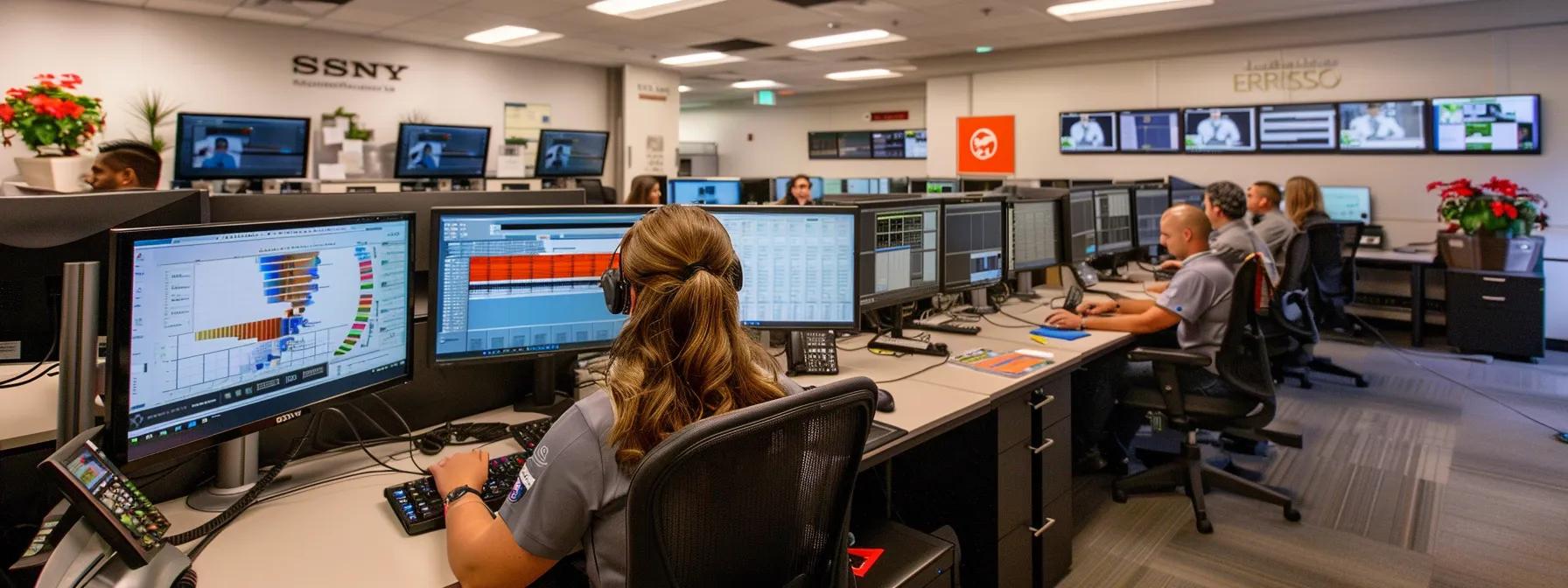
Quality assurance is the keystone in a customer support environment where consistent, high-quality interactions are mandatory for building customer loyalty and retention. This section delves into specific metrics designed to assess and enhance the quality of each contact interaction and monitor systems that support continuous improvement. Quality metrics, often collected through direct reviews and customer feedback, are instrumental in identifying areas for agent improvement and process refinement.
Utilizing Quality Assurance (QA) Scores to Maintain Service Standards
Quality Assurance (QA) scores are derived from the systematic assessment of agent interactions based on standardized criteria. These criteria may include call clarity, adherence to scripts, proper resolution of issues, and overall professional demeanor. Regular QA evaluations help maintain high service standards by identifying both strengths and areas for improvement. QA scores also facilitate personalized coaching and provide a benchmark for agent performance. Incorporating continuous training based on QA insights leads to higher customer satisfaction and better first call resolution rates. Furthermore, the integration of AI-powered speech analytics in QA systems allows for a more objective and data-driven review of interactions, resulting in a more consistent and reliable quality assessment process.
Measuring Wrap-Up Time or After-Call Work (ACW) for Process Efficiency
After-Call Work (ACW), or wrap-up time, is the period agents spend completing necessary documentation and case updates following a call. Minimizing excessive wrap-up time is essential for efficiency, as it directly affects the overall call handling capacity. Efficient ACW processes ensure that agents can transition quickly between calls without compromising data accuracy or service quality. Streamlined after-call work, supported by robust knowledge base systems and automated data entry processes, helps reduce agent workload and speed up overall call center operations. Monitoring this metric reveals bottlenecks in procedural workflows and highlights opportunities for automation, training, or system improvements—all of which can have a meaningful impact on productivity and quality.
Analyzing Transfer Rate to Identify Knowledge Gaps or Process Issues
Transfer rate is a metric that tracks the percentage of calls that are transferred from one agent to another. A high transfer rate can indicate underlying knowledge gaps or procedural issues that prevent agents from resolving calls on first contact. By closely monitoring transfer rates, managers can identify areas where additional training may be necessary or where process simplifications could be implemented. Reducing unnecessary call transfers improves the customer experience by ensuring that customers are promptly connected to a knowledgeable representative. Additionally, low transfer rates are typically associated with higher first contact resolution and enhanced overall operational efficiency, leading to better client satisfaction metrics.
Monitoring Repeat Call Rate for Unresolved Issues
The Repeat Call Rate measures the percentage of customers who need to call back for the same issue. This metric is a strong indicator of unresolved problems or inadequate service during the initial call. A high repeat call rate often signifies that agents may not have been able to fully resolve customer problems and that there is room for improvement in either agent training or process clarity. Focusing on lowering the repeat call rate by empowering agents with more automated tools or detailed knowledge bases can drive significant improvements in
and operational costs, as customers are less likely to experience frustration or dissatisfaction when issues are resolved efficiently on the first call.
Assessing Average Age of Query for Resolution Timeliness
The Average Age of Query measures the time elapsed from when a customer issue is first reported until it is fully resolved. This metric provides insight into the effectiveness of follow-up and escalation processes within the call center. A lower average age indicates that customer issues are resolved quickly, which is correlated with higher satisfaction rates and improved customer loyalty. By regularly reviewing the average age of queries, managers can identify delays or roadblocks in the resolution process. This prompt response not only improves the customer experience but also contributes to a more effective workflow across teams and a reduction in overall operational expenses.
Key Takeaways: – QA scores provide a detailed assessment of service quality and agent performance. – Wrap-Up Time (ACW) minimization is crucial for maintaining call center efficiency. – High transfer rates and repeat call rates signal potential gaps in training and process clarity. – Monitoring the average age of queries ensures that issues are resolved promptly, promoting customer satisfaction.
Leveraging Call Center Metrics for Enhanced Performance

Using call center metrics strategically can transform operational performance by driving targeted improvements and enhancing overall service quality. This section explains how to set realistic goals, use data for continuous improvement, invest in agent training, incorporate advanced technology, and regularly assess performance. Leveraging quantitative insights from
metrics allows companies to streamline processes, reduce risks, and elevate both agent performance and customer satisfaction.
Setting Realistic and Achievable Goals Based on Call Center Metrics
Establishing clear, realistic goals is the foundation for any performance improvement initiative in a call center. Metrics such as Average Handle Time, First Call Resolution, and Customer Satisfaction Score provide quantifiable benchmarks that can be turned into actionable targets. For example, call centers may set a goal to improve FCR by 10% over six months or to reduce AHT by 5%. These goals ensure that agents and teams have a clear direction and purpose. Setting targets based on historical performance data also leads to more attainable improvements, thus fostering a culture of continuous progress. When these metric-based goals are communicated effectively, it sets a benchmark that aligns daily operations with strategic priorities like increased customer support efficiency and optimized retention rate.
Using Data From Call Center Metrics to Identify Areas for Improvement
Data-driven improvement is a core advantage of leveraging call center metrics. By analyzing call trends, customer feedback, and performance benchmarks, managers can pinpoint bottlenecks and inconsistencies in service. Detailed analysis of operational metrics such as call volume, transfer rates, and wrap-up times reveals systemic issues that can be addressed through targeted training or process redesigns. For instance, if a particular agent or team consistently shows longer average handle times, this might indicate the need for enhanced training on call handling or better knowledge management. Organizations that embed data analytics into their call center strategy can continuously tweak their operations, leading to improved responsiveness and higher customer lifetime value.
Conducting Agent Training and Coaching Informed by Call Center Metrics
Agent training is most effective when it is informed by data collected from robust performance metrics. Individual QA scores, FCR percentages, and transfer rates offer valuable insights into each agent’s strengths and weaknesses. Such detailed performance data provides the basis for personalized coaching sessions that directly address identified gaps. For example, if an agent experiences a high rate of call transfers, targeted training on troubleshooting and conflict resolution may be implemented. Similarly, consistent monitoring of Average Handle Time can help managers refine call scripts and reduce call duration without compromising quality. Coaching programs based on real-time data not only foster continuous professional development but also lead to improved morale and lower employee turnover.
Implementing Technology to Optimize Call Center Performance Based on Metrics
The integration of advanced technologies, such as AI-powered call analytics, predictive dialers, and real-time workforce management software, has revolutionized call center operations. Such tools enable the rapid collection and analysis of a wide range of call center metrics, thereby facilitating immediate corrective actions and long-term improvements. For example, systems that provide real-time alerts when ASA peaks help managers quickly adjust staffing resources, ensuring that service levels remain high. Additionally, automated quality monitoring can reduce the administrative burden on supervisors while preserving the consistency and accuracy of performance reviews. The synergy between data analytics and technology creates an environment in which agents can focus on delivering exemplary customer support, thereby driving improved customer success and retention.
Regularly Assessing Progress Towards Metric-Based Goals
Continuous monitoring and regular progress assessment are crucial for ensuring that performance objectives are met. By scheduling periodic reviews of key metrics and comparing them to established benchmarks, call center managers can determine whether implemented strategies are effective or if further adjustments are needed. Such assessments can include weekly performance reports, monthly trend analyses, and quarterly reviews. This process not only ensures accountability across teams but also provides the flexibility to pivot when required. The feedback loop generated through regular assessments is integral to a culture of continuous improvement, ultimately leading to optimal call center efficiency, higher service quality, and increased revenue through enhanced customer support.
Key Takeaways: – Realistic goals based on performance benchmarks drive continuous improvement. – Data analytics highlight specific areas needing targeted enhancements. – Tailored training programs based on agent performance data improve individual and team outcomes. – Advanced technology and automated tools enable real-time adjustments. – Regular performance reviews maintain accountability and facilitate agile management.
Advanced Call Center Metrics for Deeper Insights

Beyond conventional performance indicators, advanced call center metrics offer deeper insights that facilitate proactive management and strategic foresight. This section explores predictive metrics, digital integration data, voice stress analysis outcomes, and success measures for self-service options. These advanced metrics provide granular information about customer sentiment and operational performance, enabling call centers to preemptively address issues and innovate their service delivery models in a data-rich environment.
Exploring Predictive Call Center Metrics for Proactive Management
Predictive metrics utilize historical data coupled with advanced analytics to forecast future call center performance. These models can project call volumes, predict potential service level breaches, and even forecast agent performance improvements over time. By leveraging machine learning algorithms integrated into call center analytics solutions, managers can anticipate spikes in call arrivals or resource shortages before they happen. For example, predictive models can alert supervisors to upcoming periods of high demand based on historical patterns and current trends, thereby enabling proactive staffing adjustments. This foresight minimizes risks associated with delayed responses and ensures that customer support remains resilient and efficient even in dynamic operational environments.
Understanding Digital Integration Metrics for Omnichannel Performance
Digital integration metrics assess the performance of various communication channels—such as email, live chat, and social media—in addition to traditional telephony. In an omnichannel environment, customer expectations are high, and consistency across every channel is critical. Digital integration metrics evaluate factors like response time, resolution time, and cross-channel interaction effectiveness. These metrics ensure that customers receive a harmonious experience, regardless of the channel they use. Integrating these data points with telephony metrics provides a comprehensive view of overall service performance, enabling organizations to manage resources effectively and deliver superior
. This holistic approach is especially important as businesses transition from traditional call centers to fully integrated contact centers.
Analyzing Voice Stress Analysis Results for Customer Emotion Insights
Voice Stress Analysis (VSA) is an innovative technique that involves analyzing vocal patterns to detect signs of stress or emotional turmoil during customer interactions. Advanced call center systems equipped with VSA capabilities can provide real-time insights into customer sentiment. This data helps identify moments of heightened frustration or satisfaction, which can be used to tailor follow-up strategies. For instance, if an agent detects elevated stress in a customer’s voice, immediate corrective measures such as prioritizing escalation protocols may be triggered. Though still emerging, VSA has the potential to add a new dimension to quality assurance and customer care services by linking emotional cues with quantitative performance metrics.
Measuring Self-Service Success Rate and Chatbot Deflection Rate
As automation and self-service options become integral parts of the customer support strategy, metrics such as Self-Service Success Rate and Chatbot Deflection Rate have gained prominence. Self-Service Success Rate measures the percentage of customer issues resolved without human intervention, while Chatbot Deflection Rate indicates how effectively chatbots are steering customers away from live agents by offering timely and relevant assistance. Higher self-service and deflection rates not only reduce operational costs but also free up agents to handle more complex queries, thereby improving overall productivity. These metrics are critical in today’s digital landscape where customers appraise organizations based on their customer service responsiveness and ease of use.
Tracking Contact Prevention Score for Proactive Issue Resolution
The Contact Prevention Score is an advanced metric that evaluates measures taken by the call center to preemptively resolve issues before customers initiate a contact. This metric assesses various strategies, including proactive notifications, automated troubleshooting guides, and efficient self-service channels. A high Contact Prevention Score suggests that customers’ needs are being anticipated, thereby reducing the volume of inbound calls and improving service quality. This forward-thinking approach not only minimizes the strain on agent resources but also enhances customer retention and trust, as issues are resolved even before they escalate. Proactive resolution initiatives are central to effective
strategies.
Key Takeaways: – Predictive metrics use data analytics for proactive call center management. – Digital integration metrics ensure a consistent omnichannel customer experience. – Voice Stress Analysis provides real-time insights into customer emotional states. – Self-service and chatbot deflection metrics reduce operational loads. – Contact Prevention Score underscores the impact of proactive customer support initiatives.
The Impact of Call Center Metrics on Business Outcomes

Call center metrics profoundly influence broader business results by aligning operational performance with strategic goals. When effectively leveraged, these metrics drive cost reductions, boost
, and contribute to enhanced revenue generation. This section examines how improving call center performance indicators directly impacts key business outcomes and underscores the importance of a data-driven approach in modern call center management.
How Improving Call Center Metrics Reduces Operational Costs
Effective call center operations are critical for minimizing operational expenditures. By optimizing metrics such as Average Speed of Answer, First Call Resolution, and Cost Per Call, organizations can streamline processes and reduce redundant interactions or unresolved issues. For instance, decreasing the average handle time by even a few seconds per call can lead to significant cost savings when multiplied across thousands of daily calls. Lower operational costs translate into better resource allocation, higher profit margins, and a more competitive pricing strategy for end customers—all of which ultimately contribute to a healthier bottom line. Advanced analytics and automation not only enable real-time adjustments but also provide actionable insights for ongoing improvements, ensuring that cost reductions continue over the long term.
The Link Between Strong Call Center Performance Indicators and Customer Retention
Customer retention is directly linked to the quality and efficiency of customer service. Call center metrics such as NPS, CSAT, and FCR are not merely performance numbers; they serve as predictors of customer loyalty and long-term engagement. Strong performance indicators reflect a seamless customer experience, reducing friction and enhancing trust in the brand. Studies have found that businesses with high customer satisfaction scores are more likely to enjoy lower churn rates and stronger customer advocacy, which contributes to increased customer lifetime value. By monitoring these metrics closely and continuously refining operational strategies, companies can build lasting relationships with customers, leading to repeat business and a solid competitive advantage.
How Call Center Metrics Contribute to Optimized Agent Performance and Reduced Burnout
Optimizing agent performance through detailed performance metrics plays a crucial role in reducing burnout and attrition rates. Metrics such as Average Handle Time, Agent Utilization, and Agent Effort Score not only measure productivity but also help to balance workload among agents. When agents are not overburdened and are provided with the necessary tools and training to work efficiently, they are less likely to experience fatigue and job dissatisfaction. This results in lower turnover rates, which in turn saves the company the high costs associated with recruitment and training. The correlation between improved metric performance and reduced burnout further reinforces the importance of using
data to foster a positive work environment that elevates both performance and employee well-being.
The Role of Call Center Metrics in Enhancing Overall Business Growth
Call center metrics are an integral component of a comprehensive business strategy that drives overall growth. When metrics such as Cost Per Call, Customer Satisfaction, and Agent Performance are analyzed collectively, they provide a roadmap for continuous operational enhancement and long-term strategic planning. Enhanced customer interactions lead to increased word-of-mouth marketing, higher brand loyalty, and ultimately, more robust revenue streams. For example, a business that successfully improves its first call resolution rate is likely to see a direct increase in customer retention and repeat sales—a factor that significantly impacts revenue and profitability. Moreover, the insights derived from advanced call center analytics can guide decisions regarding technology adoption and workforce management, ensuring incremental improvements that support sustainable business growth.
Connecting Call Center Metrics to Revenue and Profitability
Linking call center performance to revenue generation and profitability is essential for understanding the true value of customer support functions. Efficient call centers drive revenue by ensuring that customer inquiries and issues are resolved promptly and effectively, which in turn improves customer satisfaction and loyalty. Furthermore, metrics such as Agent Utilization and Cost Per Call directly inform budgeting and financial planning decisions. For instance, data showing improved efficiency may justify investments in automation and technology upgrades that further reduce costs and boost revenue. Ultimately, call center metrics serve as the bridge between operational performance and strategic financial planning, enabling businesses to optimize every aspect of customer interaction for maximum profitability.
Key Takeaways: – Improved call center metrics lead to substantial reductions in operational costs. – Strong performance indicators foster customer retention and enhanced lifetime value. – Optimizing agent performance through measured KPIs reduces burnout and turnover. – Call center metrics directly contribute to overall business growth and increased revenue. – Linking performance to profitability ensures that every customer interaction has a strategic impact.
Frequently Asked Questions
Q: What are the most important call center metrics to track? A: The most important call center metrics include Average Handle Time, First Call Resolution, Customer Satisfaction Score, and Service Level. These metrics provide insights into both operational efficiency and customer experience, ensuring that call centers can continuously improve performance.
Q: How can call center metrics help reduce operational costs? A: By monitoring metrics such as Cost Per Call and Average Speed of Answer, companies can identify inefficiencies, optimize staffing levels, and streamline processes. These improvements lead to better resource allocation, reduced wait times, and consequently, lower operational expenses.
Q: How does first call resolution impact customer satisfaction? A: A high first call resolution rate signifies that customer issues are resolved during the initial contact, reducing the frustration of repeated calls and leading to higher overall customer satisfaction. It is a critical performance indicator for both customer experience and efficiency.
Q: What role does voice stress analysis play in call centers? A: Voice stress analysis (VSA) provides real-time insights into the emotional state of customers by analyzing vocal patterns. This metric can help agents tailor their responses to diffuse tense situations, thereby improving quality assurance and customer outcomes.
Q: How can call centers use predictive analytics to improve performance? A: Predictive analytics leverages historical data and trend analysis to forecast call volumes, agent performance, and potential service level threats. This allows call centers to proactively adjust resource allocation and adopt preventive measures, ensuring consistent and efficient customer support.
Q: What is the importance of self-service success rate in modern call centers? A: The self-service success rate measures how effectively automated systems and chatbots resolve customer issues without agent intervention. High self-service success rates reduce overall call volume, improve operational efficiency, and enable human agents to focus on more complex queries, ultimately enhancing customer satisfaction.
Final Thoughts
Call center metrics are critical to driving both immediate customer satisfaction and long-term business growth. By leveraging detailed performance data—from customer experience measures to agent productivity indicators—organizations can optimize their operations and reduce costs while improving service quality. Advanced metrics like predictive analytics and digital integration further empower call centers to proactively manage performance and anticipate customer needs. Embracing a data-driven approach in call center management leads to more efficient operations, higher customer loyalty, and ultimately, a significant competitive advantage in the marketplace.
Dazonn Assist can help you achieve these vital call center metrics through its tailored customer support solutions and advanced performance management tools. With a deep understanding of industry benchmarks and KPI-driven operations, Dazonn empowers your business to track and enhance key metrics such as First Call Resolution, Average Handle Time, and Customer Satisfaction Score. Their team of skilled agents is trained to deliver consistent, high-quality service while leveraging real-time analytics and reporting dashboards to monitor efficiency and identify improvement areas. By partnering with Dazonn Assist, businesses gain access to scalable support, cutting-edge technology integration, and a results-focused strategy that ensures optimal performance, reduced operational costs, and enhanced customer loyalty.