


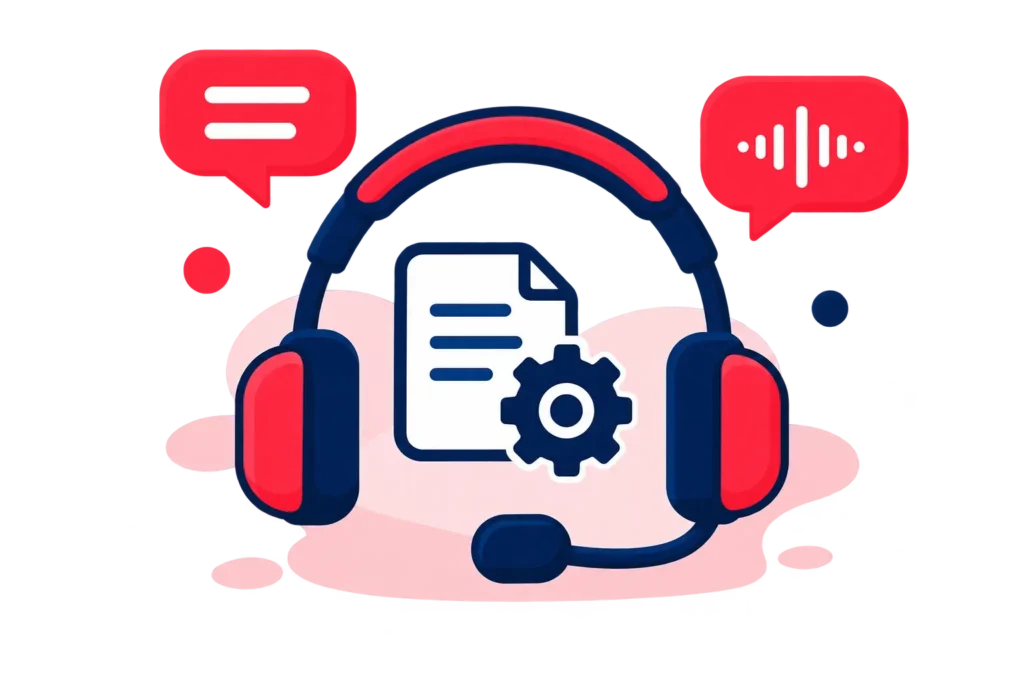






Chat process in BPO is a customer service channel in which trained agents communicate with customers through live chat, website messaging, mobile applications, or other text-based platforms.
It allows businesses to answer questions, resolve basic problems, provide order assistance, support purchase decisions, and record customer interactions without requiring a phone call.
What Does Chat Process Mean in BPO?
Chat process in BPO means outsourcing text-based customer conversations to an external business process outsourcing team.
Agents use approved scripts, knowledge bases, customer records, and help desk tools to provide accurate responses. Professional chat support services may cover customer enquiries, order assistance, pre-sales questions, basic troubleshooting, ticket creation, and escalation.
Chat support may be real-time, as with website live chat, or slightly delayed, as with messaging applications.
How Does Chat Process Work in BPO?
The process usually follows these steps:
- A customer opens the chat option on a website, application, or messaging platform.
- The system collects basic information or asks the customer to select a query type.
- The conversation is assigned to an available agent.
- The agent reviews the message and available customer history.
- The agent provides information, guides the customer, or creates a ticket.
- Complex issues are escalated to the appropriate team.
- The interaction is recorded for reporting and quality review.
Chat systems may connect with CRM, order management, and ticketing platforms, helping agents check information without switching between several tools.
What Are the Types of Chat Process in BPO?
1. Live Chat Support
Live chat provides real-time assistance through a company’s website or application. It is commonly used for product questions, order updates, account assistance, and service enquiries.
2. Messaging Support
Messaging support may be provided through WhatsApp, Messenger, SMS, or similar platforms. Responses may be immediate or slightly delayed.
3. Technical Chat Support
Technical chat agents help customers with login problems, software errors, product setup, and basic troubleshooting. Complex cases may be transferred to specialist technical support services.
4. Sales Chat Support
Sales chat helps visitors compare products, check availability, understand pricing, and complete purchases. It is useful for online stores using eCommerce support services for order, return, cancellation, and post-purchase enquiries.
What Does a Chat Process Executive Do?
A chat process executive manages customer conversations through written support channels.
Common responsibilities include:
- Responding to customer enquiries
- Resolving basic problems
- Providing product or service information
- Checking order or account details
- Managing multiple conversations when permitted
- Creating tickets for unresolved issues
- Escalating complex queries
- Recording interaction details
- Following approved communication guidelines
The role requires both speed and accuracy. Agents should confirm the customer’s concern before offering a solution and avoid sending copied answers that do not match the situation.
What Skills Are Required for Chat Process Jobs?
Important chat process skills include:
- Writing skills: Clear grammar, professional tone, and simple explanations
- Typing accuracy: Fast responses without spelling or factual errors
- Multitasking: Managing several conversations without mixing customer details
- Active reading: Identifying the main concern and important information
- Problem-solving: Selecting the right response or escalation path
- System knowledge: Using CRM, help desk, product, and policy resources
Typing speed is useful, but accuracy and customer understanding are more important than sending an immediate response.
What Are the Benefits of Chat Process in BPO?
Faster Initial Responses
Customers can begin a conversation without waiting in a telephone queue. Agents can answer quick questions while users remain on the website or application.
Efficient Use of Agent Capacity
Depending on query complexity and company policy, one trained agent may manage several chats. This makes the channel suitable for short or repetitive enquiries.
Greater Customer Convenience
Customers can communicate while browsing, working, or completing another task. They also receive a written record of the information shared.
Recorded Conversations
Chat transcripts support quality monitoring, complaint reviews, agent coaching, and customer follow-ups.
Scalable Support
Businesses can increase chat capacity during product launches, campaigns, seasonal demand, or other periods of increased customer activity.
Wider customer support services may combine chat with phone, email, ticket, and social media assistance to create a multichannel support process.
Chat Process vs Voice Process
| Feature | Chat Process | Voice Process |
|---|---|---|
| Communication | Text-based | Telephone conversation |
| Response | Real-time or slightly delayed | Real-time |
| Agent capacity | May handle multiple chats | Usually one call at a time |
| Best use | Quick or repetitive queries | Complex or urgent issues |
| Record | Written transcript | Call recording or agent notes |
| Main skill | Writing and typing | Speaking and listening |
Chat is not automatically better than voice support. The suitable channel depends on the customer’s issue, urgency, preference, and need for a detailed discussion.
For example, a customer asking about delivery status may prefer chat. A customer dealing with a complicated billing dispute may find a telephone conversation easier.
Why Is Chat Process Becoming Popular?
Chat support fits naturally into websites, applications, and online buying journeys. Customers can ask questions without leaving the page they are viewing.
Businesses also gain access to written records, measurable response data, and information about recurring customer questions.
Chatbots can manage basic prompts, collect customer details, and direct conversations to the appropriate team. However, customers should have a clear option to reach a human agent when automation cannot resolve the issue.
When Should Businesses Use Chat Process?
Chat process may be suitable when:
- Customers need quick written answers
- The business receives repetitive enquiries
- Many customers use digital platforms
- Order and delivery questions are common
- Website visitors need pre-purchase guidance
- Written interaction records are useful
- Telephone queues are consistently busy
Chat support works best as part of a multichannel strategy rather than a complete replacement for telephone or email support.
Businesses should also define which queries agents can resolve, which require ticket creation, and which must be escalated to another department.
Future Trends in BPO Chat Process
Chat operations are increasingly using AI-assisted response suggestions, automated conversation summaries, chatbot-to-agent transfers, real-time analytics, and CRM integration.
These tools can reduce repetitive work and help agents find information faster. Human judgement remains necessary for complaints, sensitive situations, unusual questions, and complex problems.
A well-managed chat process combines suitable technology with trained agents, clear escalation procedures, updated knowledge resources, and regular quality reviews. This helps businesses provide convenient written support while maintaining accuracy and consistent customer communication.
Frequently Asked Questions
Chat process in BPO: What is it in simple terms?
A customer support system that involves assisting customers using chats or messages rather than voice calls.
Is it voice-based or non-voice?
It is a non-voice job since the mode of communication is not voice-based but text-based.
What tasks are performed in chat process jobs?
It involves replying to customers’ questions, resolving issues, and supplying information using chat services.
What qualifications do you need for chat process jobs?
Good typing, communication, multitasking, and problem-solving abilities are critical for chat process jobs.
What are the advantages of chat process?
Some of the benefits include fast reply times, reduced costs, increased scalability, and greater client satisfaction.
Which is better between chat process and voice process?
It all depends on the situation since each has its strengths and weaknesses.