






...

Data Entry Outsourcing Services

Our Data Workflow

Receive Data

Convert / Process

Quality Check

Deliver Results

Need Dedicated Business Support?

Common Challenges

Disorganized records

Billing delays

Disorganized records

How We Help

Structured indexing

Accurate billing support

Defined operational workflows

Need healthcare workflow support?

Why E-commerce Teams Choose Us

Reduce processing time and speed up delivery.

Seamless communication across your operations.

Easily scale your team as your store grows.

Running a growing online store?

Data Entry Services for Accurate and Scalable Data Management

Data plays a central role in modern business operations, from customer records and financial information to product catalogs, invoices, property documents, insurance claims, and logistics records. Accurate data management becomes more challenging as the volume of data increases.

Data entry offers a systematic method of managing business information on spreadsheets, databases, customer relationship management (CRM), enterprise resource planning (ERP), and other business software. It is here that professional help with data management offered by Dazonn Assist may come in handy.

Instead of treating record entry as an isolated administrative task, businesses can integrate it into defined workflows that include validation, cleansing, processing, and quality checks.

We support businesses across the USA, UK, Canada, Australia, and other markets through a global delivery approach designed around defined workflows and business requirements.

100% Secure

Your data is protected

Expert Team

Trained & experienced

Proven Results

Trusted by growing businesses

Get a Custom Outsourcing Support Plan

Tell us your requirements and our team will suggest the right outsourcing model for your business.

What Services Are Included in Data Entry Outsourcing?

Data entry is not limited to typing information into spreadsheets. It can include multiple forms of data capture, record updating, validation, digitization, and industry-specific information management.

data entry services- Dazonn Assist

Core Service Components

Manual and automated data entry from documents, PDF files, spreadsheets, and forms

In general terms, the above services may be integrated with the following services:

Data processing services and data conversion services.

Which Businesses Use Data Entry Services?

Data entry outsourcing is used across industries where accurate, current, and well-organized information is important for daily operations.

Common Business Users

E-commerce data entry and inventory management
E-commerce Businesses

Managing product catalogs, SKUs, pricing, inventory records, supplier information, order data, and marketplace listings.

Healthcare data entry and patient record management
Healthcare Organizations

Entering and organizing patient-related administrative information, medical documents, billing data, and other healthcare records according to defined workflows.

Benefits Of Outsourcing CPA (Certified Public Accountant) Services For Startups
Financial Services Firms

Managing transaction information, invoices, account records, reports, and other structured financial data.

Logistics data entry and shipment tracking.
Logistics and Supply Chain Businesses

Managing shipment details, freight records, inventory updates, delivery information, proof-of-delivery data, and other operational records through logistics data entry services.

Real Estate Transaction Coordinator
Real Estate Businesses

Real estate data entry may include property listings, buyer and seller information, sales records, commission information, transaction documents, and property-related paperwork. Administrative data support can also help transaction coordinators keep documentation and status records organized throughout a property transaction.

BPO vs KPO
Manufacturing Businesses

Manufacturing data entry can involve production records, inventory information, supplier data, purchase orders, material records, quality documentation, and other operational information.

Two professionals reviewing healthcare records with audit checklist.
Legal Firms and Professional Services

Legal document data entry can support the digitization and organization of case information, agreements, forms, property documents, and other structured legal records.

BPO Role in Insurance Industry
Insurance Businesses

Insurance claim data entry can include information from claim forms, policy documents, renewal forms, enrollment documents, payment records, and other insurance-related paperwork.
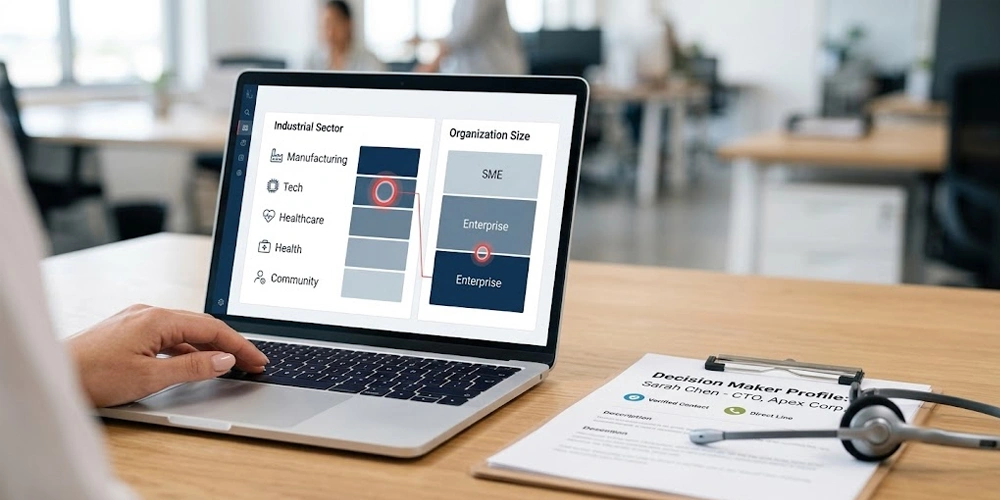
B2B telemarketing lead targeting dashboard
B2B Service Providers

Managing CRM records, customer information, lead databases, vendor records, reporting data, and other operational databases.

Across these industries, the objective is not simply to enter information. The data also needs to remain consistent, searchable, and usable across business systems.

Which Businesses Use Data Entry Services?

A structured workflow helps maintain accuracy and consistency when large volumes of records need to be captured or updated.

Standard Workflow Framework

Data Collection

Information is received from agreed sources such as emails, scanned documents, PDFs, spreadsheets, images, forms, databases, or online systems.
Data Entry & Structuring

Relevant information is entered into specified templates, databases, CRM platforms, ERP systems, catalogs, or other business applications.
Verification and Quality Assessments

Records are reviewed using defined validation rules to identify incomplete information, formatting problems, duplicates, or entry errors.
Integration and Processing

Where required, information is prepared for use in CRM, ERP, reporting, e-commerce, logistics, finance, or other operational systems.

Storage & Retrieval

Completed records are organized in the required format so authorized teams can locate and use the information efficiently.

This workflow may overlap with data processing or conversion when information must also be cleaned, reorganized, standardized, or transformed into another format.

What Problems Do Data Entry Services Solve?

Dazonn Assist data support is typically used to address specific operational problems rather than treating data entry as an isolated activity.

Key Problems Solved

High Volume of Data Tasks

Growing document, transaction, customer, product, or operational volumes can make manual record management difficult for internal teams.

Inconsistent Data Across Systems

Different teams or applications may store information differently, creating duplicate, incomplete, or inconsistent records.

Time-Consuming Administrative Work

Repetitive record entry, copying, updating, and verification can consume time that internal employees need for other responsibilities.

Error-Prone Manual Processes

Information entered without clear validation rules can create errors that later affect reporting, order processing, billing, customer service, or other operations.

Delayed Reporting and Decision-Making

Backlogs and unstructured records can delay the availability of information required for reports and routine business decisions.

A structured approach helps businesses create more consistent data workflows and clearer ownership of routine information-management tasks.

Data entry validation and record management.

Common Business Use Cases for Data Entry Services

Data entry usually forms part of an existing business workflow rather than operating as a completely separate process.

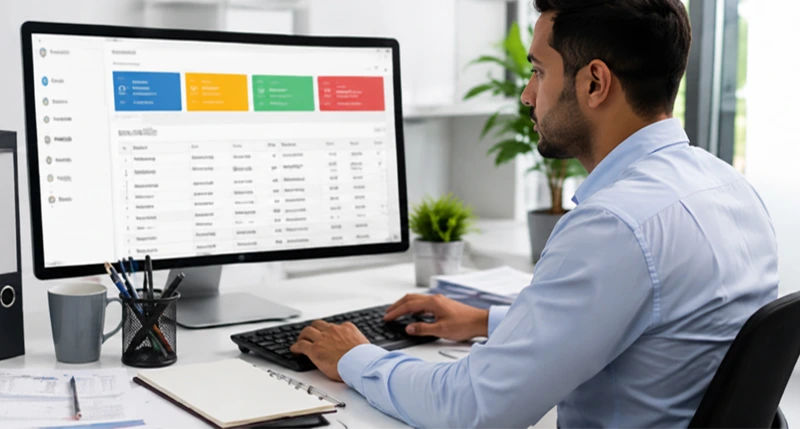
Business data entry dashboard and records.

Practical Use Cases

Benefits and Considerations of Data Entry Outsourcing

Key Benefits

Operational Efficiency

Routine record entry, updates, and validation can be assigned to a dedicated workflow, reducing repetitive administrative work for internal teams.

Scalability

Businesses can adjust processing capacity when document, transaction, product, customer, or operational data volumes change.

Process Consistency

Defined templates, validation rules, and quality checks can help maintain consistent records across larger datasets.

Support for Different Data Sources

Workflows can be designed for online systems as well as offline documents, scanned files, forms, images, and spreadsheets.

Focus on Core Activities

Internal employees can spend more time on responsibilities that require business knowledge, analysis, decision-making, or customer interaction.

Considerations Before Outsourcing

Organizations generally receive more value when outsourced data operations are treated as an extension of existing business workflows rather than a separate manual task.

Data Entry vs Data Processing vs Data Conversion

These services are closely related but serve different purposes within the data lifecycle.

Service Type Primary Function When It’s Used
Data Entry Capturing and structuring information When records need to be created or updated
Data Processing Cleansing, validating, organizing, and preparing data When existing information needs improvement or further processing
Data Conversion Transforming information between formats or systems During migration, digitization, or system integration

For example, invoice information may first be entered into a system, validated and processed according to business rules, and later converted into another format for reporting or migration.

Many businesses therefore use a combination of these services depending on the complexity of their information workflows.

How Scalable Data Entry Teams Operate

Modern outsourced data operations are usually organized around repeatable workflows rather than assigning individual tasks without clear controls.

Key Operational Elements

This approach makes it easier to increase or reduce processing capacity as business requirements change.

What Is Outsourcing Data Annotation

When Should Businesses Outsource Data Entry?

Outsourcing becomes relevant when routine information-management work starts affecting internal capacity, accuracy, or turnaround times.

Common Indicators

Businesses operating across different markets can also use distributed teams when workflows need to continue across different working hours and time zones.

How to Choose the Right Data Entry Service Approach?

The appropriate model depends on the volume, sensitivity, source format, destination system, and complexity of the information being handled.

Key Decision Factors

Volume and Frequency

High-volume or recurring operations may require dedicated workflows or teams, while smaller periodic projects may use shared resources.

Type of Data

Product catalogs, invoices, insurance claims, legal documents, real estate records, logistics data, manufacturing records, and online forms may each require different fields and validation rules.

Accuracy Requirements

Finance, healthcare, insurance, legal, and other sensitive workflows may require additional validation and review stages.

Online vs Offline Requirements

Some projects require direct entry into online portals, CRM systems, or databases, while others involve offline spreadsheets, documents, images, or scanned records.

System Integration

The team may need to work with CRM, ERP, e-commerce platforms, internal databases, or other business applications.

Data Security Requirements

Access permissions and handling procedures should reflect the sensitivity of the information.

Need for Related Services

Data cleansing, mining, processing, validation, or conversion services may be required before or after the entry stage.

A structured assessment helps businesses select the right workflow instead of outsourcing tasks solely based on volume or short-term cost.

Data Processing

Frequently asked questions

What are data entry services?

Data entry services involve capturing, organizing, updating, and maintaining business information in databases, spreadsheets, CRM platforms, ERP systems, catalogs, and other applications.

Data entry focuses on capturing and structuring information, while data processing may include cleansing, validation, standardization, organization, and preparation of that information for business use.

It can be useful when repetitive record management takes time away from core activities or when a small business needs additional processing capacity without building a larger internal team.

Accuracy can be supported through predefined data fields, validation rules, verification checks, exception reviews, and quality-control procedures.

Depending on security and access requirements, businesses can outsource tasks involving product catalogs, invoices, forms, images, CRM records, insurance claims, real estate documents, manufacturing records, logistics information, legal documents, and other structured or unstructured business records.

Data conversion is required when information needs to be transferred from one format, database, or system into another while maintaining its structure and usability.