


Data Analytics Services

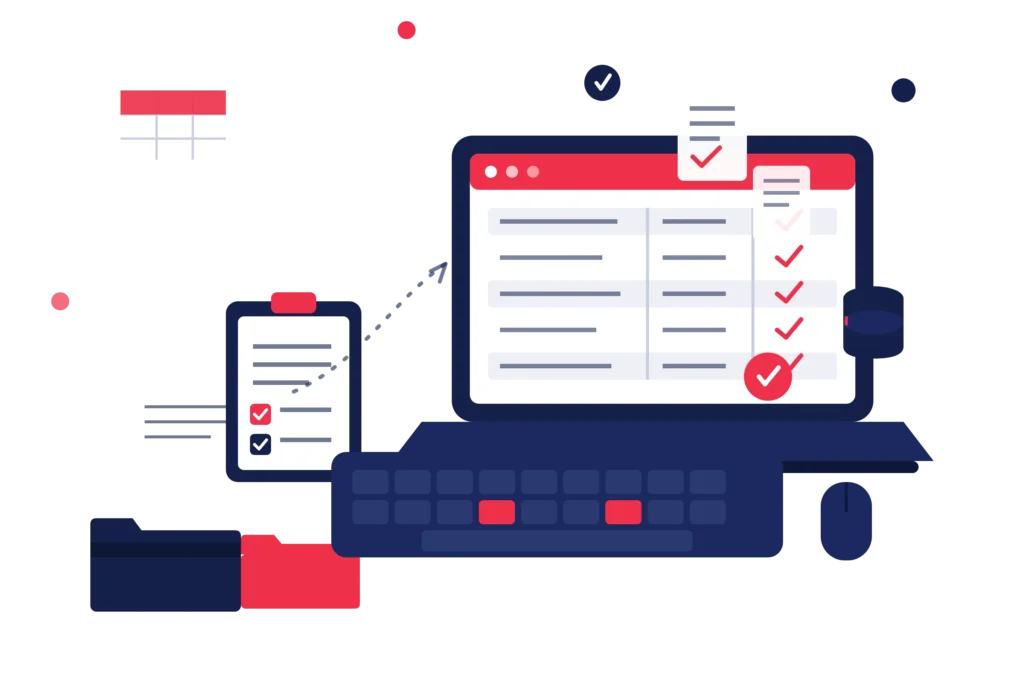
Our Data Workflow
Receive Data
Convert / Process
Quality Check
Deliver Results
Common Challenges
Disorganized records
Billing delays
Disorganized records
How We Help
Structured indexing
Accurate billing support
Defined operational workflows
Why E-commerce Teams Choose Us
- Faster Order Handling
Reduce processing time and speed up delivery.
-
Better
Coordination
Seamless communication across your operations.
-
Scalable
Support
Easily scale your team as your store grows.

Data Analytics Services for Clearer Business Reporting and Better Decisions
Businesses collect data from sales, operational activities, financial performance, customer service and online activities daily. However, when information is spread out in different sheets, platforms and reports, it may be difficult to understand which parts perform well, which develop problems and which need particular attention.
Data analytics services assist in transforming information that companies have prepared into understandable reports, KPIs, dashboards and other useful insights. Rather than involving in-house employees into manual work of collecting numbers, businesses can adopt an analytic support process and thus keep reports consistent and receive more visibility into everyday performance.
At Dazonn Assist, we offer data analytics services in a controlled back-office process, clear reporting needs and approved systems. We provide our support to businesses in the United States, the UK, Canada and Australia.
100% Secure
Your data is protected
Expert Team
Trained & experienced
Proven Results
Trusted by growing businesses
- Dazonn Assist
Get a Custom Outsourcing Support Plan
Tell us your requirements and our team will suggest the right outsourcing model for your business.
What Are Data Analytics Services?
Data analytics services help businesses examine organized data to understand performance, identify trends and support better-informed operational decisions. The work may involve tracking agreed KPIs, comparing results across periods, investigating variances and presenting findings through spreadsheets, dashboards or management reports.
The purpose is not only to prepare reports. It is to make business information easier to review and use. With clear metrics and regular reporting, managers can see what is changing across their operations and focus discussions on the areas that need attention.
Data analysis begins once information is available in a usable form. It differs from data entry, which captures records, and data processing services, which cleans, validates and structures information. Analysis focuses on what the prepared data means for the business.

What Tasks Are Included in Data Analytics Services?
Data analyst support can include a range of reporting and performance analysis activities based on the agreed scope.
KPI Tracking and Performance Reporting
- Tracking agreed operational, sales or service KPIs
- Preparing weekly, monthly or periodic performance reports
- Comparing results against previous periods, targets or benchmarks
Dashboard Preparation and Maintenance
- Updating approved dashboards with current information
- Preparing dashboard-ready data and summaries
- Maintaining consistent reporting layouts and definitions
Sales, Customer and Operational Analysis
- Reporting on orders, returns, customer activity and product performance
- Reviewing ticket volumes, response times and SLA trends
- Measuring workload, processing time and operational productivity
Spreadsheet Analysis and Reporting
- Preparing structured spreadsheet reports
- Validating data before inclusion in reports
- Organizing report outputs for management review
Trend and Variance Analysis
- Identifying changes in sales, volumes, service levels or productivity
- Reviewing exceptions and variances against agreed measures
- Highlighting patterns that may require stakeholder review
Ad Hoc Business Analysis
- Investigating defined business questions using available data
- Preparing one-time analysis for internal reviews
- Providing clear findings in agreed report formats
How Do Data Analytics Services Work?
Data analyst support follows a structured process so reporting is based on clear definitions, suitable data entry services and agreed quality checks.
Data Analysis Workflow
Each stage is supported by defined workflows so teams know what is being measured, where the data comes from and how results are reviewed.
| Stage | Description |
|---|---|
| Requirement Mapping | Reviewing business questions, reporting objectives, stakeholders and delivery frequency |
| Data Review | Assessing the available data for structure, completeness and consistency |
| KPI and Report Setup | Defining calculations, report formats, dashboard requirements and review rules |
| Analysis and Reporting | Preparing reports, dashboards and findings on the agreed schedule |
| Quality Check | Checking calculations, formats and exceptions against documented rules |
| Delivery and Review | Sharing agreed outputs and refining reporting as requirements evolve |
Who Should Use Data Analytics Services?
Data analytics services are useful for businesses that have recurring reporting needs but do not want to build or expand a full in-house analytics team. They can also support organizations whose internal teams spend too much time gathering data and preparing reports instead of reviewing performance.
Common Businesses and Teams Include:
E-commerce and D2C businesses tracking sales, returns, products and inventory
Customer support teams monitoring ticket volumes, SLA performance and service trends
Finance and leadership teams preparing management reports and variance analysis
Logistics and order-management teams measuring volumes, turnaround times and exceptions
Growing companies that need more consistent reporting across departments
Businesses with information spread across multiple systems, recurring reporting deadlines or limited internal analytical capacity can benefit most from a defined analyst support workflow.
Common Business Use Cases
Data conversion services cater to several purposes, including:

E-commerce Reporting
- Sales, order, return and product-performance reporting
- Inventory movement and customer activity summaries

Finance and Management Reporting
- Budget-versus-actual comparisons
- Periodic management reports and variance summaries
Customer Support Operations
- Ticket-volume, response-time and SLA reporting
- Contact-reason and productivity trend analysis

Order and Logistics Operations
- Order volumes, processing times and shipment-exception reporting
- Delivery and service-performance trend monitoring
Internal Business Reviews
- Departmental KPI reports and stakeholder summaries
- Ad hoc analysis for defined operational questions
Key Benefits of Data Analytics Services
Regular reporting gives managers a structured view of business performance instead of scattered information across separate files and systems.
Defined KPI rules, report formats and delivery schedules help teams review the same metrics consistently over time.
Outsourced analyst support can reduce the administrative burden of compiling reports, allowing internal teams to focus on decisions and execution.
Support can be aligned with reporting frequency, data volumes and evolving business requirements without immediately expanding the internal team.
Defined data sources, calculations and review responsibilities create greater clarity around how reports are prepared and checked.

Quality Control and Reporting Accuracy
Accurate reporting depends on clear source data, consistent calculations and documented review procedures. Before recurring delivery begins, we work with clients to define the data sources, KPI logic, reporting formats and exception-handling process relevant to the engagement.
Quality indicators can include:
- Validation of key report inputs before analysis
- Consistent KPI definitions and calculation rules
- Review of unusual figures, missing information and variances
- Standardized report formats and delivery procedures
- Escalation of data-quality concerns to the designated stakeholder
These controls help make reports more reliable, repeatable and useful for business review.
Data Security and Confidentiality
Data analytics services often involve access to operational, customer, financial or performance information. Appropriate access controls and data conversion services practices are therefore essential.
Important considerations include:
- Client-approved system access and permissions
- Defined data-access boundaries for the assigned workflow
- Secure handling of business files and report outputs
- Role-based responsibilities and escalation procedures
- Alignment with relevant client policies and industry requirements
Data security requirements are discussed during onboarding so the support model can be structured around your approved processes.
Data Analysis vs Data Processing
| Aspect | Data Analysis | Data Processing |
|---|---|---|
| Focus | Interpreting prepared data to understand performance and trends | Cleaning, validating, categorizing and structuring data |
| Main Output | KPIs, dashboards, reports and findings | Organized, usable datasets |
| Typical Use | Management reporting, performance monitoring and business reviews | Preparing information for reporting or operational use |
| Business Value | Helps teams understand what the data is showing | Helps ensure the data is suitable for use |
Data processing provides the foundation for reliable analysis. Where information requires cleaning or standardization before it can be reported on, both services can work together as part of a structured data workflow.
Onboarding and Implementation
Data analyst support starts with a clear onboarding process to make sure reporting is aligned with your business needs. This typically includes:
- Requirement analysis and stakeholder mapping
- Review of available data sources and reporting systems
- Definition of KPI calculations and report formats
- Agreement on reporting schedules and delivery channels
- Establishment of data-access and quality-control rules
- Pilot reporting or initial review before recurring delivery
This approach helps identify potential data gaps, confirm expectations and establish a reporting process that internal teams can rely on.
Why Structured Data Analysis Matters
When reporting is inconsistent or dependent on manual effort, decision-makers may receive information too late or lack confidence in what they are seeing. Structured data analysis creates a more dependable reporting routine, making performance trends easier to identify and business discussions easier to focus.
Outsourcing analyst support can give organizations access to dedicated reporting capacity without adding immediate pressure to internal teams. The model is designed to support your existing processes, while keeping business ownership, approvals and final decisions with your organization.

Frequently asked questions
What does an outsourced data analyst do?
An outsourced data analyst works with agreed datasets to track KPIs, prepare reports, maintain dashboards, examine trends and investigate defined business questions. The exact work depends on the scope, data availability and reporting requirements.
How are data analytics services different from data processing?
Data processing prepares data by cleaning, validating and organizing it. Data analysis uses that prepared data to measure performance, identify patterns and present findings through reports or dashboards.
Can you work with our existing reporting systems?
Yes. Existing spreadsheets, reporting tools and approved business systems can be reviewed during the requirement-mapping stage to confirm compatibility and access requirements.
Can you provide recurring reporting support?
Yes. Support can be structured for weekly, monthly or other agreed reporting schedules based on workload, business hours and the required outputs.
Can you build or update dashboards?
Dashboard preparation or maintenance can be included where the platform, data access and required analyst skills are confirmed during scoping.
Can you analyze e-commerce and operational data?
Yes. The service can support areas such as sales, orders, returns, inventory, customer support and operational performance when the relevant information is available.
Do data analytics services include data science or machine learning?
Not automatically. This service focuses on reporting, KPI analysis, trends, variances and business interpretation. Data science, machine learning and complex data engineering work should be scoped separately when needed.
How is reporting accuracy maintained?
Reporting quality is supported by agreed KPI definitions, data sources, calculation rules, report formats and review steps. Exceptions or missing information are raised through the agreed escalation process.